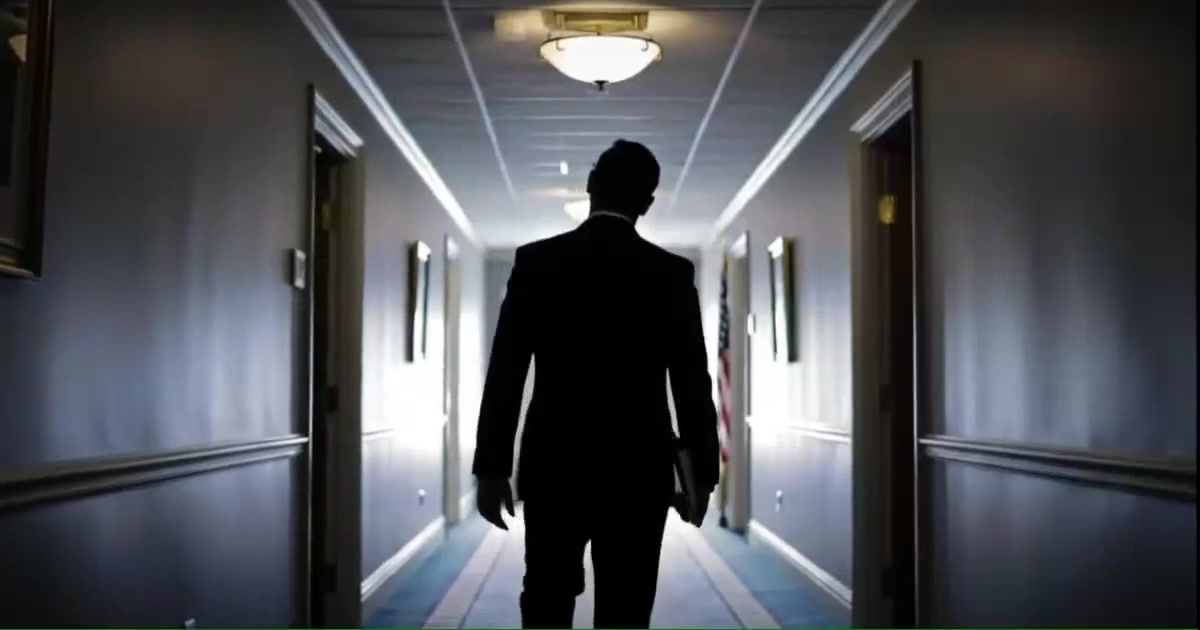
The Moment You Notice: Someone feeling down, sitting alone, standing back from everyone else.
There is a strange little moment that happens to us all the time.
We notice something.
Someone’s voice changes.
A friend becomes unusually quiet.
A child stops playing.
Someone smiles, but the smile doesn’t quite reach their eyes.
We notice the hesitation before someone answers a question. The tension in a room. The person standing just a little too far away from everyone else.
Most of these moments seem insignificant.
We notice them, and then we move on.
But sometimes we don’t.
Sometimes something catches our attention and refuses to let go.
And I have begun to wonder if that tiny moment—the moment we notice—may be far more important than we realize.
Because seeing and noticing are not quite the same thing.
We see an enormous amount every day. Our senses are constantly gathering information, much of which never reaches our conscious attention.
Noticing is different.
Noticing is when something crosses the invisible threshold between what is happening and what we become aware is happening.
And once we notice, something else becomes possible.
We can choose what to do with what we have seen.
The Moment You Notice: Seeing Isn’t the Same As Noticing
What happens next?
Imagine that you notice someone is vulnerable.
Perhaps they’re frightened.
Perhaps they’re lonely.
Perhaps they’re desperate for approval.
Perhaps they’re simply having a terrible day.
The vulnerability itself is neither good nor bad. It is simply something you have perceived.
But what happens next can tell us something about the consciousness doing the perceiving.
One person might think:
How can I help?
Another might think:
How can I avoid making this worse?
Another might not know what to do at all—but recognize that something is wrong and remain present.
And another person might see the same vulnerability and immediately begin calculating how it could be used.
The perception is the same.
The orientation is not.
This is something I’ve been thinking about a great deal lately.
We often assume that a person who understands other people well must therefore possess a highly developed consciousness.
But that isn’t necessarily true.
The Moment You Notice: Predators Can Notice Too
A predator has to be observant.
A predator has to recognize weakness.
A predator has to understand behavior well enough to anticipate what another creature will do.
In fact, some of the most destructive people can be extraordinarily perceptive.
They notice everything.
They simply use what they notice differently.
And perhaps that is one of the great misunderstandings about consciousness.
Awareness by itself does not make us wise.
We can become extremely good at seeing without becoming any better at understanding.
We can become extraordinarily skilled at reading other people without ever becoming interested in what our knowledge does to them.
We can learn someone’s fears, desires, insecurities and dreams—and use that knowledge either to protect them or to control them.
The difference isn’t necessarily in the information.
It is in the direction that information takes us.
The Moment You Notice: The Space Between Seeing & Doing Stands Choice
The little space between noticing and doing
There is, however, something remarkable that can happen between perception and action.
A pause.
It might last only a second.
We notice our irritation before we speak.
We notice that someone is afraid before we push harder.
We notice our own desire to win an argument.
We notice the impulse to retaliate.
We notice that we are enjoying someone else’s humiliation.
We notice.
And suddenly we have a choice that we didn’t have a moment before.
We can still make the wrong choice.
We can still be angry. We can still be selfish. We can still misunderstand.
Being conscious does not make us perfect.
But noticing gives us the opportunity to interrupt the automatic response.
Perhaps that is where consciousness becomes something more than perception.
Perhaps consciousness is not simply the ability to see what is happening.
Perhaps it is the ability to see what is happening and remain conscious of what we do next.
The Moment You Notice: Yourself Noticing Within
And sometimes the thing we notice is ourselves
This may be the hardest kind of noticing.
It is relatively easy to recognize someone else’s cruelty.
It is much harder to recognize our own.
We notice the manipulation in someone else, but not the manipulation in ourselves.
We notice another person’s need for control, but overlook our own.
We recognize someone else’s arrogance while quietly protecting our own.
We can become very clever at seeing what we don’t want to see in ourselves.
This is where the inward journey becomes important.
Becoming conscious isn’t simply learning more about the world.
Sometimes it means becoming willing to look at what is happening inside us without immediately defending it, explaining it away, or pretending it isn’t there.
Because the moment we notice something within ourselves, we have a choice too.
We can turn away.
We can become defensive.
We can blame someone else.
Or we can stay with what we have seen long enough to understand it.
That small pause can change everything.
That Is Where Consciousness Begins & Sapience Grows
The moment you notice
Maybe this is why I have become so fascinated by the word sapience.
We tend to associate wisdom with knowledge.
But perhaps wisdom begins somewhere much smaller.
Perhaps it begins with attention.
With the willingness to look again.
To notice what everyone else has stopped seeing.
To notice what we would rather not see.
To notice the consequences of our own actions.
And then, importantly, to choose.
Not always perfectly.
Not always bravely.
Not always wisely.
But consciously.
Because the moment we notice, something changes.
The world has presented us with information.
And for one brief moment, before instinct, habit, fear, desire or conditioning takes over, we have a choice about what we will do with it.
Perhaps that is one of the smallest—and most consequential—moments in human consciousness.
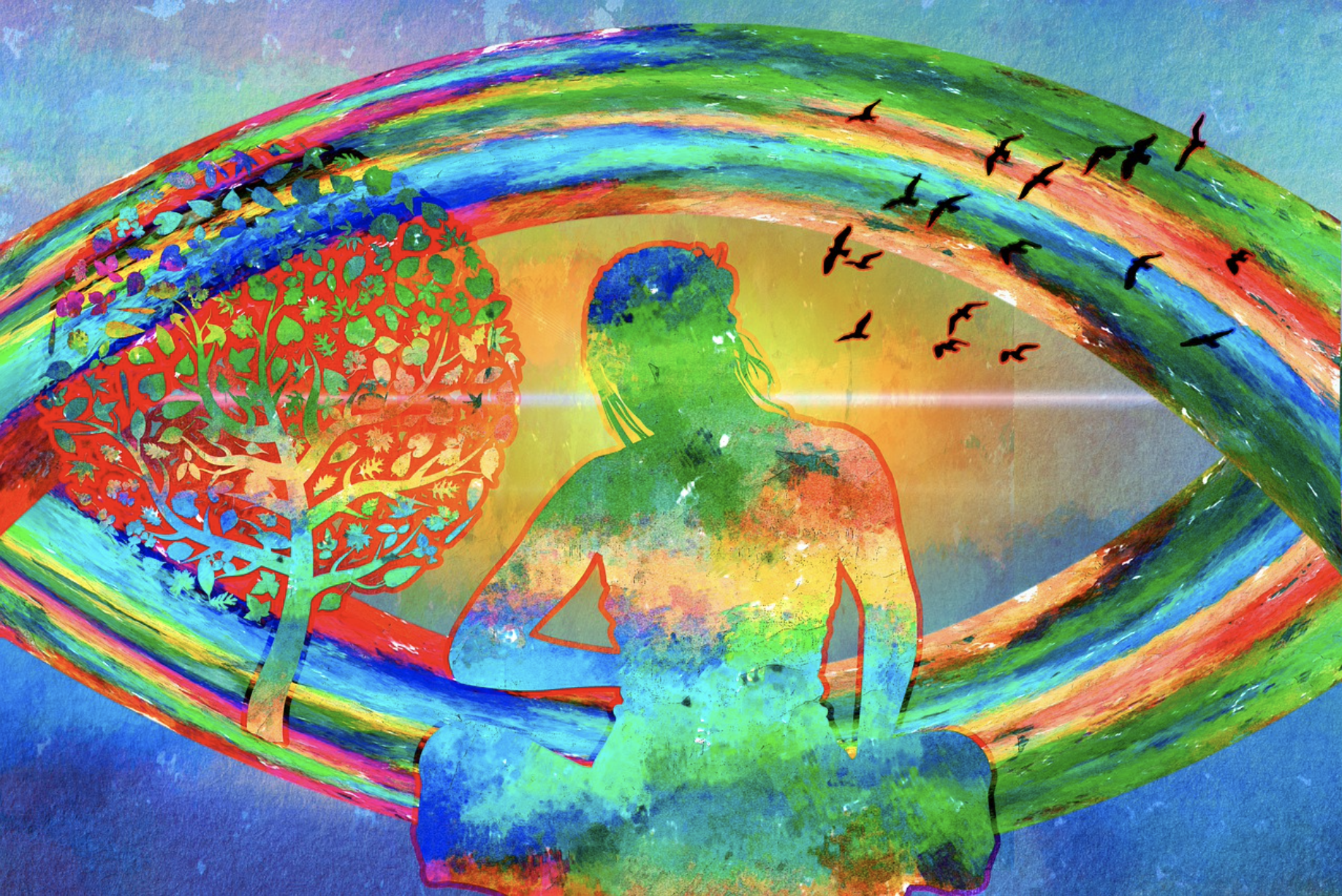
This is an image of the moment consciousness awakens: the instant we become aware of something beyond what we previously understood and discover that becoming conscious means seeing both light and dark choices. The Moment is always now. This is a companion piece to Sept. 6 blog: The Moment You Notice.
Donald Trump has recently embraced a rather extraordinary place in history, one he himself compares to Attila the Hun.
According to journalists Maggie Haberman and Jonathan Swan, Trump proudly showed them a document comparing his power with some of history’s most feared rulers: Attila the Hun, Genghis Khan, Alexander the Great, Napoleon, the Caesars, William the Conqueror, Tamerlane, Hitler, Stalin, and Mao. The document argued that those rulers may have possessed terrifying power in their own time, but their reach was ultimately local compared with Trump’s global reach. Trump reportedly presented the comparison with pride.
There is something almost comical about placing Attila the Hun on such a list.
Not because Attila was a good man. He wasn’t. He was a ruthless conqueror who plundered cities, killed enemies, demanded tribute, and built his reputation through fear.
But because if Trump wants to stand beside Attila as a Great Man of History, it is worth asking a very simple question:
What, exactly, did Attila the Hun have to work with?
He did not inherit the presidency of the world’s most powerful nation. He did not command a permanent military establishment equipped with nuclear weapons. He did not inherit a global economic system, a vast bureaucracy, modern communications, or a network of international alliances.
Attila started with the Huns.
And somehow, he turned them into an empire that terrified Rome.
That is where the comparison gets interesting.
What did Attila have to work with?
Attila: The Original Empire Mob Boss
If we strip away the romantic mythology surrounding the Huns, Attila’s empire begins to look surprisingly familiar.
It was, in many respects, a vast system of power, loyalty, protection, tribute, rewards, and intimidation.
Attila ruled over a collection of peoples who did not necessarily share a common culture or identity. His power depended upon keeping warriors, tribal leaders, and conquered peoples sufficiently loyal to him that they would continue supplying soldiers and wealth.
And Attila understood the fundamental rule of the mob boss:
Loyalty has to pay.
The Huns needed wealth to reward their allies. Rome had wealth. Attila therefore created a relationship in which Rome repeatedly paid for peace.
The Eastern Roman Empire eventually agreed to enormous payments, including an annual tribute of 2,100 pounds of gold. When Rome resisted, Attila could turn diplomacy into military coercion.
That is not merely brute force.
It is organized power.
Attila could negotiate. He could intimidate. He could form alliances. He could recruit other peoples into his armies. He could reward loyalty and punish defection.
He was, in other words, an empire-level mob boss.
And unlike the stereotypical barbarian warlord, Attila the Hun had studied the people he intended to defeat. He and his brother were taught military skills as well as Latin and Gothic, and Attila was exposed to Roman political and diplomatic practices from an early age.
He understood Rome.
More importantly, he understood what made Rome vulnerable.
Attila and his War Leaders
And Here Is Where Trump Falls Short
This is where the comparison becomes much more interesting than simply calling Trump another ruthless ruler.
Trump possesses vastly more raw institutional power than Attila ever dreamed of possessing.
But that is precisely the point.
Attila had to create his power. Trump inherited his.
Attila united fractious tribes.
Trump inherited a nation of more than 300 million people.
Attila the Hun built a military coalition from warriors belonging to different peoples.
Trump inherited the most powerful military establishment on Earth.
Attila extracted tribute from the Roman Empire because Rome feared what his armies could do.
Trump does not have to ride across Europe to make his demands felt. He occupies the presidency of the United States, with its enormous economic, military, diplomatic, and technological reach already built for him.
Attila’s authority was personal because there was little institutional machinery beneath him.
Trump’s authority is personality too—but it operates through one of the most powerful institutions ever created.
That is a very different accomplishment.
And there is another difference.
Attila actually went to war.
He personally commanded the Hunnic military machine and led campaigns across Europe. His armies invaded the Balkans, threatened Constantinople, invaded Gaul, and entered Italy. His reputation was not merely rhetorical. It arrived on horseback.
Trump can order military force, and that distinction matters enormously. But the comparison to Attila should not pretend that commanding the machinery of a modern state is the same thing as personally building and directing a fifth-century warrior empire from the margins of the Roman world.
Trump has the larger machine.
Attila the Hun built the scarier one relative to what he started with.
Attila vs Trump | Empire vs Illusion
The Mob Boss Has One Fatal Problem
Here is where Attila’s story becomes even more relevant to the Great Man theory.
Attila’s empire was built around Attila.
That made him extraordinarily powerful.
It also made his empire extraordinarily fragile.
When Attila the Hun died in 453, his sons fought over the inheritance. Subject peoples revolted, and the Hunnic political structure rapidly disintegrated. Within a few years, the empire that had terrified Rome was essentially gone.
Attila therefore provides us with both halves of the Great Man story.
One man can build extraordinary power.
But if that power cannot survive the man, it may never have been an empire in the durable sense.
It was a personal empire.
A personality empire.
A loyalty empire.
A mob boss empire.
And that may be the most revealing lesson of all.
Attila Stands at the Center of His Empire
The Empire That Vanished Like Smoke
The final irony of Attila’s story is that the man who seemed powerful enough to shake the Roman world could not create a political structure powerful enough to survive him.
That does not make Attila the Hun insignificant.
Quite the opposite.
He built a formidable empire from a fragmented collection of peoples, forced the Roman Empire to negotiate with him, extracted enormous wealth from it, commanded armies drawn from multiple nations, and altered the political and military landscape of late antiquity. His campaigns helped accelerate the crisis of a Roman world that was already weakening.
But Attila ultimately demonstrated the weakness hidden inside absolute personal power:
When everything depends upon the Great Man, the Great Man becomes the empire.
And when the Great Man dies, the empire can disappear with him.
That is the part of Attila’s story Donald Trump might want to consider before claiming a place above him.
Trump may possess greater technological reach.
He may command a vastly more powerful military.
He may possess unprecedented access to global communications.
He may wield the presidency of the most powerful nation on Earth.
But those are not accomplishments he created from nothing.
Attila had no such advantages.
He started with a collection of nomadic warrior peoples on the edge of the Roman world.
And he made Rome pay him to go away.
That is what an empire mob boss actually looks like.
And if history is going to remember Donald Trump as one of the great ruthless rulers, the question will not ultimately be how loudly he claimed the title.
It will be what he actually built that survived him.
Because Attila the Hun learned the hardest lesson of the Great Man:
An empire built entirely around one man can become enormous.
There are books we read because we are interested in them. And there are books we return to because something in the world has changed—and suddenly the book seems to be reading us. For me, Carl Jung’s Aion has become the second kind of book.
I began creating A Visual Field Guide to Carl Jung’s AION — Deciphering Symbols of the Modern Psyche as a very personal experiment: to pull out passages that stopped me in my tracks and place them beside symbols and images I drew myself, later refining those drawings through an AI Pop Art process.
It became something more than an illustrated notebook.
It became a visual map of a psychological landscape I believe we urgently need to enter.
Because Aion is not really a book about ancient Christianity.
It is a book about what happens when human beings encounter the darkness within themselves—and refuse to recognize it.
And that problem has become very modern.
ENTER THE SHADOW | CG Jung
The Shadow Comes First
The first passage I selected is Jung’s discussion of the Shadow.
That was deliberate.
Before we can understand anything else, we have to understand the part of ourselves we would rather not see.
The Shadow contains qualities we reject, repress, deny, or refuse to acknowledge as belonging to us. Individually, this can produce projection: I am not angry; you are angry. I am not cruel; they are cruel. I am not greedy; they are greedy.
Collectively, the consequences become much larger.
A society can project its unwanted qualities onto another political tribe, another race, another nation, another religion, immigrants, intellectuals, elites, the poor, the wealthy, liberals, conservatives—or virtually anyone who can be turned into the Other.
And once we have successfully placed our darkness outside ourselves, we become extraordinarily vulnerable to anyone who promises to destroy it for us.
That is one reason Jung’s Shadow matters so much right now.
The question is not simply:
Who is evil?
The harder question is:
What part of evil are we capable of participating in while believing ourselves to be completely righteous?
That is a much more dangerous question.
Projection and Inflation | CG Jung
Inflation: When the Ego Becomes Bigger Than the Self
My next selection concerns inflation.
Jung used the term psychologically, but it has an obvious collective dimension.
Inflation occurs when the ego identifies with something larger than itself and begins to experience that power, certainty, intelligence, morality, destiny, or authority as personally possessed.
The individual stops saying:
I have encountered something greater than myself.
And begins saying:
I am the greater thing.
This distinction becomes crucial in politics.
A leader can begin to embody something larger than an individual personality: nation, religion, destiny, restoration, justice, security, prosperity, greatness.
Followers may then project their own hopes, fears, rage, longing, and unlived potential onto that person.
The leader becomes larger than life.
The followers become psychologically invested in protecting the projection.
And disagreement begins to feel like betrayal.
Jung’s political psychology is useful precisely because it helps us see that political movements are not made entirely of rational arguments. They can become containers for unconscious psychological forces. Jungian scholarship has explicitly connected inflation with identification with contents of the collective unconscious.
This does not mean that every political leader is a Jungian archetype.
It means something more uncomfortable:
Human beings can turn political leaders into archetypal containers.
And when we do, we stop seeing the human being clearly.
Anima and Animus | CG Jung
The Anima, Animus, and the Shadow
I selected Jung’s discussion of the Anima, Animus, and Shadow because these figures remind us that we are never psychologically as simple as our conscious identities suggest.
There are qualities within us that we have not integrated.
There are voices we have dismissed.
There are ways of thinking and feeling that we have projected onto other people because we could not tolerate encountering them within ourselves. For example, we fear or are ashamed of these qualities so much, we do not recognize them as originating from inside ourselves while freely judging and condemning the person we have cast them onto.
Individuation is therefore not becoming more certain about who we are. Indeed, it may involve increasingly unsure of who we are.
Rather, it is becoming more conscious of everything we are not yet conscious of.
That distinction matters enormously in an age of political certainty.
The person who believes they possess the entire truth is psychologically very different from the person who understands that truth may contain contradictions they have not yet integrated.
Mandala | Photo by Pixabay on Pexels.com | CG Jung established the mandala as a symbol of the Self
The Mandala and the Self
Then comes the mandala.
The mandala is one of Jung’s great images of psychic wholeness.
Its importance is almost the opposite of our contemporary obsession with division.
A mandala does not erase opposites.
It contains them like nature does naturally all the time without spectacle, condemnation, or projection. For example, a Crepe Myrtle tree can contain last year’s dried out blossoms and fruit, while sporting dark green foliage and bright pink blossoms. There is no contradiction for the Crepe Myrtle. There is only a continuous becoming and unbecoming, of blooming and of leaves and blossoms dying.
This is what I think we have forgotten.
We keep trying to create wholeness by eliminating everything that contradicts us.
But psychological wholeness is not achieved by destroying the parts we dislike.
It is achieved by becoming conscious enough to hold the tension between opposites.
That is what Jung called individuation.
And perhaps that is also what our civilization desperately needs.
Not uniformity.
Not ideological purity.
Not everyone agreeing.
Conscious differentiation without dehumanization.
Mass Man and the Food of Darkness
The Food of Darkness
One of the most disturbing images in my visual field guide is also one of the most playful.
I drew a toddler being fed worms, spiders, ghosts, and other wonderfully icky things.
The image comes from a much darker passage in Aion, where Jung describes what he calls the “post-Christian spirit”—a distorted spiritual consciousness characterized by arrogance, hysteria, woolly thinking, primal amorality, fanaticism, shallow spiritual commodities, counterfeit art, philosophical incoherence, and utopian promises that can be fed “wholesale” to the masses.
That phrase stayed with me:
fed wholesale to the mass man.
Because what are we fed psychologically?
What ideas are we given before we are old enough to question them?
What fears?
What doctrines?
What certainties?
What stories about good and evil?
What promises about salvation?
What explanations for why we are right and they are wrong?
A child cannot yet distinguish nourishment from poison.
It consumes what the adults around it provide.
That is true psychologically as well as physically.
I grew up in a family of preachers on both sides of my family, so I was surrounded from childhood by biblical stories, theology, symbolism, morality, and competing interpretations of what those ancient stories meant. That upbringing gave me a lifelong fascination with the Bible and with the psychological power of its symbols—but it also taught me something else:
A sacred story can become very dangerous when people stop questioning their interpretation of it.
I learned this in a particularly painful way when my family was driven out of a small South Dakota town after a minority of people strongly opposed my father’s broad and creative ways of interpreting two-thousand-year-old biblical stories.
I don’t tell that story to condemn Christianity.
Quite the opposite.
It taught me how easily something that begins as a living spiritual tradition can become rigid when people become convinced that their interpretation is the only legitimate one.
That experience is part of why Jung’s passage speaks so strongly to me.
He was not simply criticizing religion.
He was warning about spiritual material that has become unconscious, distorted, mass-produced, and consumed without discrimination.
And that is much bigger than religion.
We are fed political stories.
We are fed advertising stories.
We are fed cultural stories.
We are fed algorithmic stories.
We are increasingly fed stories generated by machines.
Some nourish consciousness.
Some make us smaller.
Some teach us to think.
Some teach us what to think.
Some invite us into complexity.
Others give us the intoxicating simplicity of certainty.
The toddler in my drawing doesn’t know whether the spider is food.
That is the point.
Consciousness must eventually learn to discriminate.
We cannot remain children forever, blindly consuming whatever psychological material is placed before us.
This is why Jung’s ideas about the Shadow, good and evil, differentiation, and individuation belong together.
The goal is not to reject everything we were given.
It is to examine it.
Digest it.
Question it.
Keep what is nourishing.
Discard what is poisonous.
And eventually become responsible for what we choose to feed ourselves—and what we feed to those who come after us.
Perhaps that is one of the great tasks of becoming conscious:
to stop being merely the recipient of inherited ideas and become the conscious author of our own inner life.
“When an Inner Situation Isn’t Made Conscious, It Is Lived as Fate” — C.G. Jung
This may be the passage from Aion that most directly explains why I created this field guide.
Jung writes:
“When an inner situation is not made conscious, it happens outside, as fate.”
The full idea is even more powerful: when inner contradictions remain unconscious, the external world can become the stage upon which those contradictions are acted out.
Think about that collectively.
What happens when millions of people carry unresolved fear?
What happens when humiliation becomes political identity?
What happens when people cannot tolerate uncertainty?
What happens when economic anxiety becomes hatred?
What happens when grief becomes rage?
What happens when people project their unlived power onto a leader?
What happens when an entire society becomes divided into opposing psychological camps?
Eventually, the conflict stops being merely psychological.
It becomes political.
Then institutional.
Then historical.
Then potentially catastrophic.
The unconscious has become fate.
Good and Evil: The Necessity of Differentiation | C.G. Jung’s Aion
Several of my selected passages concern good and evil and the psyche’s capacity to judge and differentiate between them.
This is an especially important distinction.
Jung was not advocating moral relativism.
Quite the opposite.
He understood that consciousness requires differentiation.
We have to be capable of saying:
This is destructive. This is exploitative. This is cruel. This is truthful. This is false. This protects human dignity. This destroys it.
But there is a psychological trap here.
We can become so identified with our own goodness that we lose the ability to see our own Shadow.
Then our moral judgment becomes another form of possession.
We become convinced that because we are fighting evil, everything we do in opposition to it must therefore be good.
That is how human beings become capable of terrible things while remaining convinced of their righteousness.
Jung’s warning is not:
It is dangerous to distinguish good from evil, lest you become the evil-doer.
It is rather:
Do not become unconscious while doing something that feel righteous.
“No One Can Possibly Know What the General Good Might Be” — C.G. Jung
This passage stopped me.
Because modern political movements constantly promise some version of the general good.
Security.
Prosperity.
Peace.
Order.
Freedom.
National greatness.
Social justice.
Public welfare.
A better future.
These are powerful ideas.
But Jung asks us to examine what happens when an abstract ideal becomes so sacred that individual human beings disappear beneath it.
The phrase “for the greater good” has probably justified more human suffering than almost any other phrase in history.
That is why consciousness matters.
The question is never merely:
What do we believe?
It is:
What happens to us psychologically when we believe it?
THE SWORD OF DAMOCLES | CG Jung’s Aion
The Antichrist and the Sword of Damocles
This is where Aion becomes especially unsettling.
Jung’s discussion of the Antichrist, the degenerated archetype, and the sword of Damocles is not something I read as a prediction of one particular modern politician.
Rather, I read it as a warning about what happens when an archetypal force becomes distorted and enters collective life through the minds of many people projecting their own unconscious content onto an ordinary person who performs as a god—or, more aptly in Jung’s language, when such a performer becomes the Antichrist.
The distinction matters.
The danger is not simply the individual who claims extraordinary power. It is also the psychological participation of the people who project extraordinary power onto that individual.
An ordinary human being can become something much larger in the collective imagination.
A savior.
A destroyer.
A messiah.
An enemy.
A god.
An antichrist.
And once an archetypal projection takes hold, the person at its center may become almost impossible to see clearly as an ordinary human being.
Jung writes about the danger of this figure being hidden beneath “high-sounding names” such as public welfare, lifelong security, and peace among nations.
That passage is uncomfortable because those are precisely the kinds of words human beings naturally want to trust.
Who could possibly object to security?
Who could object to peace?
Who could object to public welfare?
The danger is not necessarily the words themselves.
The danger is what can hide behind them.
The Sword of Damocles
I had encountered the expression “the sword of Damocles” many times before, but I had never actually stopped to learn the story behind it.
According to the ancient story, Damocles was a courtier who envied the wealth, luxury, and power of the ruler Dionysius II of Syracuse. Dionysius offered Damocles the opportunity to sit in his place and experience the king’s life for himself.
There was only one condition.
Above Damocles’ head, Dionysius had a sharp sword suspended by a single strand of horsehair.
Suddenly the luxurious banquet no longer felt quite so luxurious.
Damocles understood that the power he had envied came with an ever-present danger hanging directly above him.
That is the meaning the phrase has carried ever since: a sword of Damocles is an imminent danger that can fall at any moment, even while everything appears outwardly secure.
I think Jung’s use of this image carries another psychological layer.
The sword does not have to represent only an external threat.
It can represent the danger created when human beings place enormous unconscious power into a person, ideology, institution, or collective fantasy—and then discover that the thing they elevated can also destroy them.
An authoritarian impulse does not always announce itself as tyranny.
Sometimes it arrives promising protection.
Sometimes it arrives promising order.
Sometimes it promises to save us from the chaos we fear.
Sometimes it tells us that surrendering a little freedom is necessary to preserve everything we love.
And sometimes we welcome it.
That is the sword of Damocles.
Not merely that some external tyrant might destroy democracy.
But that our own unconscious longing for certainty, safety, power, revenge, or belonging can help create the conditions in which domination becomes possible.
The sword is hanging above all of us.
The question is whether we are conscious enough to see it.
Why This Matters in 2026
We are living through an extraordinarily polarized political moment.
In the United States, current assessments have documented declining measures of political rights and civil liberties, increasing institutional dysfunction, political polarization, and growing pressure on democratic norms. Public distrust is also profound: in a 2026 Pew Research Center survey, 58% of Americans viewed the Republican Party unfavorably and 59% viewed the Democratic Party unfavorably, while 26% held unfavorable views of both parties.
But I do not think the answer is simply to choose the correct political tribe.
That would be too easy.
The deeper question is whether we can become conscious enough to recognize our own participation in the psychological machinery of division. Whether we are brave enough and strong enough to see that history isn’t just something that happens to people. Human beings participate in creating the psychological conditions from which history emerges.
This is where Jung becomes politically relevant without becoming partisan.
If I only see the Shadow in them, I remain unconscious.
If I can see the Shadow in myself, something changes.
If I can recognize my capacity for hatred, cruelty, arrogance, fear, tribalism, projection, domination, and self-righteousness, I become harder to manipulate through those very forces.
I become harder to possess.
THE NEW ROCK | Two rocks remain in the foreground. One is smooth, white, solid, and completely empty. The other is dark and multicolored—black, brown, yellow—with a tiny luminous blue fish moving inside it. The broken Earth continues falling away around them. | CG Jung’s Aion
The New Rock
The image I created for this passage may be one of the most important in the entire field guide.
Jung writes about “the new rock” taking the place of Christ, connecting it to the idea that, through the descent and indwelling of the Holy Ghost, every individual can become a “new rock”—a living stone.
He refers to I Peter 2:5:
“Be you also as living stones built up.”
I found this fascinating because Jung is describing a movement from something external and singular toward something that can become indwelling and individual.
The sacred is no longer only something we look toward.
It is something we must encounter within ourselves.
That is how I understand the idea of the living stone.
So I drew two rocks.
One is white, solid, and completely empty.
The other is black, brown, and yellow, with a tiny blue fish moving inside it.
Around them, the Earth itself is being shattered by enormous forces.
And beneath the destruction, blue fish continue swimming through the waters.
For me, the waters represent the vast, moving realm of the unconscious. The little fish are living contents within that deeper psychic world—small, mysterious, and capable of moving through places where the solid structures above them are breaking apart.
The empty rock is not evil.
It is simply uninhabited.
It is solid, but nothing is moving inside it.
The other rock has become alive.
Something has entered it.
Something moves within it.
Something connects it to the larger waters.
That distinction matters to me because Jung’s “new rock” is not simply a replacement structure. It is a transformation of what a human being can become.
And this raises an uncomfortable question:
What happens when the old structures that told us who we were begin to shatter?
We are living through a time when many of the structures people once relied upon for meaning and certainty are being challenged—religious institutions, political institutions, national identities, economic assumptions, cultural traditions, even our confidence that technology will necessarily make the future better.
When the world around us becomes unstable, our first impulse is often to build another rock.
Another ideology.
Another leader.
Another certainty.
Another system that promises to tell us what is true.
But Jung’s image suggests another possibility.
Perhaps the task is not simply to find a new structure to worship.
Perhaps the task is to become alive within ourselves.
That is a very different kind of rock.
A living stone does not mean an isolated individual who believes that everything exists inside the ego. Quite the opposite. The little fish in my image remains connected to the waters beyond the rock.
The individual is not the whole ocean.
The individual contains a relationship to something much larger.
And perhaps that is what makes the image of the fish so important.
The fish does not need to understand the entire ocean in order to live within it.
It moves.
It responds.
It remains connected.
It is alive.
The Earth in my drawing is being shattered, but the fish keep swimming.
That may be one of the most hopeful images in this entire book.
Because structures can collapse without everything living inside us having to die with them.
Something deeper can survive the destruction.
Something can continue moving beneath the surface.
Something can emerge.
The Danger of the New Rock
But Jung’s idea also contains a warning.
Every human being who believes they have discovered the new truth can become convinced that they themselves are the new rock.
That is where inflation can return.
The living stone can become another idol.
A spiritual insight can become a doctrine.
A revelation can become a hierarchy.
A symbol can become a weapon.
A person who discovers something alive within themselves can begin believing that they alone possess the truth.
And then we have simply rebuilt the old structure in a new form.
The point is not to replace one absolute certainty with another.
The point is to become conscious enough to remain alive.
Perhaps that is what makes the word living so important.
A living thing changes.
It responds.
It grows.
It encounters what is other than itself.
It cannot be reduced to a rigid doctrine without killing something essential.
That is why I do not see Jung’s “New Rock” as a command to find another external authority.
I see it as an invitation to ask:
What is alive within me?
What have I inherited that is merely a stone?
What have I mistaken for truth because everyone around me believed it?
What living thing might be moving beneath the surface of my conscious life?
And perhaps most importantly:
When the world around me begins to shatter, what will I become?
A dead stone waiting to be rebuilt into another structure?
Or a living stone—connected to the deeper waters, capable of moving, changing, and becoming conscious?
The Earth may fracture.
The old rocks may fall.
But the fish are still swimming.
The Fish, Agape, and the Possibility of Another Way | C.G Jung’s Aion
One of the most beautiful—and strangest—images in my field guide came from Jung’s discussion of the fish.
Jung describes an ancient Christian symbolism in which Christ and those who believe in him are represented as fish. Fish become the food at the Agape, the sacred communal meal. Baptism becomes immersion in a fish pond.
The fish is everywhere.
It lives in the water.
It is immersed.
It is eaten.
It becomes a symbol of Christ and the believer.
And so I drew a fish bowl.
Inside it is the Earth.
Three beautiful fish—one purple, one blue, and one orange-yellow—swim around the planet.
Outside the bowl stands a human being.
But the human being isn’t simply looking at the fish.
The fish are looking back.
And the person’s lips are pressed against the glass, exposing their teeth.
I honestly did not set out with a fully formed explanation for why I drew it this way.
Sometimes the image arrives before the conscious interpretation.
That is part of why I believe symbols are so useful.
They can show us something before we understand it.
Who Is Looking at Whom?
The obvious interpretation would be that the human being is observing the fish.
But look more closely.
The fish are observing the human being too.
That changes everything.
Who is actually being watched?
Who is outside?
Who is inside?
Who is observing?
Who is being observed?
And why are the person’s teeth showing?
Perhaps the human being wants to consume what is inside the bowl.
Perhaps the teeth suggest hunger.
Perhaps they suggest predation.
Perhaps the person is longing to enter.
Perhaps the glass represents the invisible boundary between conscious life and the deeper psychic world.
Or perhaps the image is simply asking us to notice how easily something sacred can become something we want to possess.
The fish are alive.
They are beautiful.
They contain the Earth.
And yet the human being outside them appears to want something from them.
That makes me think about Agape.
Agape is often translated as a form of selfless or divine love, but Jung’s passage introduces an extraordinary paradox: the fish representing Christ and believers also become the food of the sacred communal meal.
Something sacred is received by being consumed.
The symbol therefore contains both love and hunger.
Nourishment and appetite.
Communion and consumption.
Reverence and possession.
That tension feels remarkably contemporary.
We live in a culture that consumes almost everything—including ideas, spirituality, identity, politics, nature, art, and increasingly one another.
Even sacred symbols can become commodities.
Even wisdom can become something we collect rather than something we embody.
The Eyes
And then there are the eyes.
I drew one brown eye and one blue eye.
Both have strange yellow diamond-shaped pupils.
I cannot tell you exactly why.
Perhaps that is the point.
The image came from somewhere deeper than my conscious explanation.
But I notice now that the two eyes are different.
The person does not see with one uniform perspective.
There are two ways of seeing.
Two colors.
Two lenses.
And yet both contain the same unusual golden diamond.
Perhaps this is another image of differentiation without separation.
We do not have to see everything identically in order to share a deeper center.
Perhaps consciousness requires learning to see through more than one lens.
Perhaps the yellow diamond is a spark of something more difficult to name—the strange, precious, watchful center that remains when the ordinary way of seeing is disrupted.
I don’t want to decide for the viewer what the eyes mean.
I would rather let them remain slightly mysterious.
Because that is what symbols do at their best.
They open a door without telling us exactly what we will find on the other side.
Baptism: Immersion
Jung’s reference to baptism as immersion in the fish pond adds another layer.
To be baptized is literally to be immersed.
You don’t stand outside the water and study it.
You enter.
That feels important psychologically.
There is a profound difference between observing consciousness and allowing yourself to be changed by an encounter with the unconscious.
We can study Jung.
We can read about the Shadow.
We can collect archetypes.
We can discuss individuation.
We can even become very knowledgeable about psychology.
And remain completely dry.
At some point, we have to enter the water.
The fish are already there.
They don’t need to be convinced that the water exists.
They live in it.
Perhaps this is part of what the ancient fish symbolism was expressing: spiritual transformation is not merely intellectual agreement.
It is immersion.
FATE OR DESTINY? The person emerges from the water onto a landscape divided between darkness and dawn. Behind them are fragments of the shattered world. Ahead is an open path. The Shadow remains beside them, integrated rather than defeated. The tiny blue fish appears briefly in the water behind them. The person looks toward the horizon. The screen slowly fills with light.
Another Way
This is why I call this section The Possibility of Another Way.
The fish don’t conquer the human being.
The human being doesn’t conquer the fish.
They simply look at one another across the glass.
For one moment, there is recognition.
That may be enough to begin.
Perhaps another way becomes possible when we stop asking:
How do I possess this symbol?
and begin asking:
What is this symbol asking me to see?
The fish may represent Christ.
They may represent believers.
They may represent the sacred food of Agape.
They may represent the unconscious life moving beneath the surface of consciousness.
They may represent something else entirely.
I don’t think a symbol has to have only one meaning.
Perhaps that is one of its gifts.
The purple, blue, and orange-yellow fish are different from one another, but they share the same water.
The Earth rests among them.
The human being stands outside.
And for a moment, they are all looking at one another.
Maybe that is the possibility of another way:
not domination, not consumption, not projection—but relationship.
To see.
To be seen.
To remain different without becoming enemies.
To enter the water rather than merely standing beside it.
And perhaps, finally, to discover that the thing we were trying to consume was actually trying to teach us how to live.
Why I Made This Field Guide
I did not make this book because I think everyone needs to become a Jung scholar.
I made it because I think we need symbols.
We live in an age saturated with information and starved for psychological language.
We have endless images, headlines, videos, political arguments, algorithms, advertisements, artificial intelligence, propaganda, outrage, entertainment, and distraction.
But information does not automatically produce consciousness.
Sometimes it produces the opposite.
More information can simply give the unconscious more material with which to build its projections.
Symbols work differently.
A symbol slows us down.
It asks us to look.
And then to look again.
That is why I drew these images.
The drawings are not illustrations of Jung’s ideas in any academic sense. They are my attempts to see what the words were showing me.
Sometimes I understood what I was drawing.
Sometimes I didn’t.
And sometimes the meaning arrived only later.
That, too, is part of what I have learned from Jung: consciousness does not always come first. Sometimes we encounter an image, a dream, a symbol, or a feeling before we understand what it is trying to tell us.
The AI Pop Art refinement became another layer of that process—a meeting between an ancient psychological text, a human hand, and a contemporary machine.
That combination itself feels strangely appropriate for our moment.
We are creating new technologies faster than we are developing the consciousness necessary to use them wisely.
Perhaps that is why we need symbols now more than ever.
Not to give us answers.
But to slow us down long enough to ask better questions.
Wake Up Before We Call It Fate
This is ultimately why I stopped my selections where I did.
The final passage comes from Deuteronomy 32:39.
There is something about ending there that feels right.
Because Aion is not comfortable reading.
It does not allow us to remain innocent.
It asks us to descend.
To look at the Shadow.
To confront inflation.
To recognize projection.
To differentiate good and evil.
To discover the Self beneath the divided ego.
To understand that what remains unconscious can become fate.
And to recognize that the greatest danger may not always be something happening to us.
Sometimes the danger is something happening through us.
That is why I believe we are living under a psychological sword of Damocles.
Not because catastrophe is inevitable.
But because unconsciousness has consequences.
And because our participation matters.
The projections we place onto other people matter.
The fears we refuse to examine matter.
The ideals we elevate without questioning matter.
The power we surrender in exchange for certainty matters.
The stories we consume—and the stories we feed to others—matter.
The way out is not perfection.
It is consciousness.
It is the willingness to ask:
What am I projecting?
What am I refusing to see?
Where have I become inflated?
What part of myself have I placed entirely in the Shadow?
What am I calling evil because I cannot bear to recognize some version of it in myself?
What ideal has become so sacred to me that I can no longer question what it permits me to do?
What am I surrendering in exchange for certainty?
And perhaps most importantly:
What happens when I refuse to wake up?
Jung believed that the task of consciousness was not to eliminate darkness but to become conscious of it.
That is why these symbols matter now.
Because we do not need more people who are absolutely certain that they are on the side of the light.
We need more people willing to carry a light into the darkness and actually look at what is there.
That is what this little visual field guide is for.
Not answers.
Not certainty.
A flashlight.
A mirror.
A map.
And perhaps, at this particular moment in history, a small reminder:
Wake up before the unconscious becomes fate.
Because fate is not the same thing as destiny.
The unconscious may shape the road ahead.
But consciousness gives us the possibility of choosing where we go.
Feature Archetypal Animation
The Shadow — A Visual Field Guide to Carl Jung’s Aion
Videos and Images made by Genolve: A symbolic journey through Jung’s Aion—from Shadow and projection to consciousness and the choice between Fate and Destiny.
The Living Symbol 03:10 — Stability: Slow-to-moderate cinematic ambient with low cello drones, glassy synth pads, muted ritual percussion, distant piano notes, and tense minor harmonies resolving toward suspended hopeful chords. No flashy solos; subtle pulses, watery textures, and eerie crescendos support mystery, unease, and awakening.
Postscript: From the Psyche to the World
There is another place where I have been exploring these same questions—not through Jungian symbols, but through story.
My Sapience series asks what happens when humanity fails to wake up in time.
In Sapience: The Moment Is Now, I imagined a near-future world in which political corruption, concentrated power, ecological collapse, and humanity’s refusal to confront its own Shadow bring civilization toward a breaking point. Book Two carries that journey much further. It follows a young girl coming of age in a world already devastated by catastrophic climate change—a world where more than eight billion people have been reduced to fewer than three billion within three decades.
This is not a prediction.
It is a possibility.
It is an exploration of what could happen if humanity continues to ignore what it already knows.
And this is where Aion and Sapience meet.
Jung wrote that when an inner situation is not made conscious, it is lived as fate.
That word matters to me.
Because I do not use fate and destiny as synonyms.
Fate is what happens when we remain unconscious. Destiny is what becomes possible when we awaken and choose.
Moment, the young protagonist of Sapience, is given a chance to make that choice. She inherits a world shaped by the choices of those who came before her. She cannot undo what has already happened. But she can decide what she will do with what she has inherited.
That is the question at the heart of the entire series:
What will you choose? Fate or Destiny?
Book Two of Sapience is coming soon via IngramSpark.
And perhaps that is ultimately why I keep returning to these questions—through Jung, through symbols, and through fiction.
Because the future is not simply something waiting for us.
It is something we are choosing, together, right now.
Aion Archetype — A Visual Field Guide to Carl Jung’s Aion
A visual journey through the archetype of conscious transition—exploring Shadow, projection, good and evil, the Self, collective psychology, and the choice between Fate and Destiny through Jung-inspired art.
There was a time when a person could have an idea that translated into meaningful work.
Not a billion-dollar idea.
Not a venture-capital idea.
Not an idea that required a marketing department, an advertising budget, a social media strategy, an algorithmic growth plan, and a six-figure investment before anyone would even see it.
Just an idea.
And if that person was willing to work hard enough, they could build something.
A shop.
A restaurant.
A small manufacturing business.
A book.
A craft.
A service.
A product nobody had thought of before.
They could begin in their own community. Their neighbors might become their first customers. Word would spread. Perhaps the business would grow to serve the surrounding region. Maybe, eventually, it would become national or even international.
It wasn’t easy.
It never was.
But there was something important in the path from small to large.
The path was possible.
And it was often organic.
My grandmothers lived in the economic culture that emerged from the Gilded Age, when America was rapidly industrializing and enormous fortunes were already being created. There was certainly inequality, exploitation, and concentrated wealth. This was never some golden age of economic fairness.
My Grandmother’s Time
But something that feels increasingly different today is the degree to which enormous fortunes have come to exert influence not merely over the economy, but over the systems that determine what we see, what we hear, what we talk about, and what we believe is worth our attention.
The billionaire doesn’t simply own a company anymore.
The billionaire may own the platform where you discover your news.
The company that sells you the product.
The media outlet that shapes the story.
The data that predicts what you will click.
The political influence that determines which policies are passed.
The advertising infrastructure that decides which small business will be visible and which will remain invisible.
And suddenly, the person with the great idea has a problem.
They have to pay to work.
I know this because I am doing it myself.
I create books.
I create art.
I create products.
I write.
I research.
I build.
I make things that I believe have meaning.
And increasingly, in order to do this work, I have to spend money simply to have the opportunity to do it.
Then I have to spend more money to tell people that I exist.
And then, if I don’t have hundreds or thousands of dollars to pour into advertising, there is a very good chance that most people will never find me.
This is the strange paradox of the modern creative economy.
We have more ways to communicate than humanity has ever had.
And yet, being heard has never been more dependent on having money.
We have more media channels than ever.
More television networks.
More streaming services.
More podcasts.
More websites.
More social media platforms.
More people with something to say.
More people with a passion they want to share.
Hundreds of thousands of people can now become “influencers.”
We have supposedly democratized the marketplace of ideas.
And yet, somehow, we seem to be becoming more homogeneous.
More predictable.
More easily manipulated.
And, in many ways, less informed.
How is that possible?
The Illusion of Choice & Work
Illusion of Choice: The more we travel to well connected modern places, the more we go nowhere at all
Alan Watts talked about this decades ago.
He observed that a person could get on an airplane in Los Angeles, fly thousands of miles across the Pacific, and arrive in Tokyo—only to discover that they hadn’t really gone anywhere.
The same chain stores.
The same restaurants.
The same consumer products.
The same fashions.
The same cultural signals.
The same manufactured desires.
The same architecture of consumption.
You had crossed an ocean, but the landscape of human life had become strangely familiar.
Watts spoke about traveling farther and finding something genuinely different when he reached places where the machinery of mass consumer culture had not yet completely taken over—such as Native American reservations.
There, he encountered something that hadn’t been standardized for mass consumption.
Something local.
Something particular.
Something that had not been flattened into the same universal template.
That was decades ago.
Imagine what he would see now.
We have more choices than ever.
And yet so many of our choices come from the same enormous systems.
The coffee may be different, but the corporation may be the same.
The clothing may be different, but the supply chain may be the same.
The streaming service may be different, but the algorithms increasingly determine what rises to the top.
The social media platform may be different, but the business model is often the same:
Capture attention.
Keep people engaged.
Sell the attention.
And the person who can spend the most money acquiring attention gets the biggest advantage.
This is why I have begun to wonder whether we are living through one of the greatest illusions of our time.
We think we have more choices because we have more channels.
But perhaps the real question is:
Who controls the channels?
The World Has Become Very Good at Making Things Look Different
The World Has Changed & Fractured; but Become More Homogeneous Than Ever
When I was younger, there were only a handful of television channels.
A person might watch one of three, five, or seven national broadcasts.
Today, we have hundreds of channels and seemingly infinite entertainment.
But the paradox is that the expansion of media has not necessarily created a greater diversity of thought.
Instead, we have created an enormous number of doors leading into increasingly similar rooms.
The technology has changed.
The ownership structures have changed.
The platforms have changed.
But the underlying incentives remain remarkably consistent.
Get attention.
Keep attention.
Monetize attention.
And if you want to compete, pay for attention.
The result is a strange new economy in which an independent artist, writer, inventor, or entrepreneur can create something extraordinary—and still remain virtually invisible.
Not because the work is bad.
Not because the idea is unimportant.
But because it exists outside the machinery that determines what gets seen.
This is where I think something profound has shifted.
The old world had gatekeepers.
The new world has algorithms.
We were told the internet would eliminate the gatekeepers.
Instead, we may have simply replaced them with invisible ones.
The New Cost of Being Yourself
The Costs of Being Yourself & Doing Something Meaningful
There is a growing number of people who want to create something meaningful.
They want to write a book.
Start a small business.
Make art.
Invent something.
Teach.
Build a community.
Grow food.
Create a product.
Make music.
Do work that feels connected to who they actually are.
But the modern economy increasingly asks a brutal question:
How much money do you have to spend before we will allow anyone to see you?
This is where the idea of “paying to work” begins.
You pay for the website.
You pay for the software.
You pay for the materials.
You pay for the inventory.
You pay for the shipping.
You pay for the photography.
You pay for the advertising.
You pay for the subscriptions.
You pay for the tools that help you create.
You pay for the tools that help you market.
And then, after paying for all of that, you still have no guarantee that anyone will find you.
You are not necessarily paying to succeed.
You are paying for the privilege of entering the arena.
And even if you make something wonderful, you are competing against people and corporations with vastly greater resources.
They can buy the billboard.
They can buy the celebrity.
They can buy the advertisement.
They can buy the search placement.
They can buy the influencer.
They can buy the attention.
And eventually, the public begins to confuse visibility with value.
We see something everywhere, so we assume it must be good.
We see everyone buying it, so we assume it must be worth buying.
We see millions of followers, so we assume the person must have something important to say.
We see a product promoted everywhere, so we assume it must be better than the product made by the person we have never heard of.
This is how a civilization can become increasingly homogeneous while believing it has more choices than ever.
The mainstream does not have to eliminate the alternatives.
It simply has to make them difficult to find.
The Dangerous Thing About the Independent Person & Work
Dangerous to Be Too Different
There is another reason people may be reluctant to support things outside the mainstream.
The mainstream feels safe.
If everyone else is buying it, watching it, wearing it, eating it, reading it, or believing it, then we don’t have to make the decision alone.
We have the comfort of the crowd.
But the person creating something independently is asking us to step outside that comfort.
To look at something unfamiliar.
To listen to an idea that hasn’t already been approved by millions of other people.
To spend money on something that doesn’t have a celebrity endorsement.
To support a person who isn’t already successful.
That requires a small act of courage.
And perhaps this is why the independent creator can feel strangely dangerous.
Not because they are actually dangerous.
But because they remind us that we have choices the system didn’t give us.
They remind us that we can make our own judgments.
That we can discover something before it becomes popular.
That we can support a person because we believe in what they are doing—not because an algorithm told us to.
That we can build something ourselves.
That we don’t need permission.
And that may be the most radical idea of all.
Ser Criston Cole and the Question of Meaning
This is what made me think about Ser Criston Cole from House of the Dragon.
Cole is complicated. He is not a simple hero. His story is, in many ways, a tragedy about what happens when a person who longs for agency and meaning becomes entangled in the machinery of power.
But there is something in the archetype that interests me.
The individual who wants to do one meaningful thing.
One thing that belongs to them.
One act that isn’t simply performed in service to a lord, a lady, a corporation, a political party, a billionaire, or a system.
The question is:
What would you do if you knew no one would reward you for doing it?
What would you build?
What would you create?
What would you say?
What would you protect?
What would you risk?
This question becomes increasingly important in a world where almost everything is measured by its market value.
Because the market asks:
Will it sell?
Will it scale?
Will it generate a return?
Will it attract enough attention to become profitable?
But human beings have always asked other questions.
Is it beautiful?
Is it true?
Is it meaningful?
Is it necessary?
Does it make life better?
Those questions don’t always produce profitable answers.
And that may be precisely why they matter.
Imagine an Alien Looking at Us
This is also why I keep thinking about Sugar.
Imagine an intelligent being from another world arriving here and studying humanity.
Imagine that this being comes from a civilization that has solved many of the problems that we still struggle with.
Perhaps their civilization is peaceful.
Perhaps they have learned cooperation.
Perhaps they have enough abundance that people are free to pursue curiosity, creativity, relationships, exploration, and discovery.
And perhaps, despite all of that harmony, their civilization has become stagnant.
Bored.
Lifeless.
So this alien comes to Earth to understand us.
And what does it find?
A species that has developed extraordinary technology.
A species capable of communicating instantly across the planet.
A species that can travel into space.
A species that has access to more information than any previous generation in history.
And yet—
People are working jobs they hate because they cannot afford to stop.
People with brilliant ideas cannot get anyone to see them.
Artists are spending more time trying to become visible than actually creating.
Small businesses are struggling to compete with corporations that can spend millions to dominate attention.
People are afraid to step outside the mainstream because the mainstream has become synonymous with safety.
And the people who have the most money increasingly have the greatest ability to determine what everyone else sees.
Perhaps the alien would ask us a very simple question:
Why?
Why did you build your civilization this way?
Why do you make people spend their lives doing things they don’t believe in?
Why do you make meaningful work economically difficult?
Why do you reward attention more than wisdom?
Why do you give the greatest influence to those who already possess the greatest wealth?
Why do you have millions of voices and still hear so little that is genuinely different?
And perhaps the most difficult question of all:
What happens to a civilization when its people can no longer afford to become who they are?
Maybe the Problem Isn’t You
Maybe It Isn’t You
I think about this whenever I encounter someone who has spent years trying to create something meaningful and has come to the conclusion that they must not be good enough because nobody noticed.
Maybe they are not failing.
Maybe they are simply trying to be heard in a system that has made attention increasingly expensive.
Maybe the problem isn’t that their idea has no value.
Maybe the problem is that value and visibility have become disconnected.
A person can create something extraordinary and remain invisible.
Another person can create something mediocre and become enormously successful because they had the resources to make sure everyone saw it.
We have to be careful not to confuse those two things.
Being seen is not the same as being valuable.
Being popular is not the same as being wise.
Being profitable is not the same as being meaningful.
And perhaps this is where those of us who still believe in the value of independent thought have a responsibility.
We have to learn to look differently.
We have to become better at finding the things that algorithms don’t necessarily put in front of us.
The writer who doesn’t have a marketing budget.
The artist whose work isn’t trending.
The small business that hasn’t been bought by a corporation.
The person with ten followers who has spent twenty years thinking deeply about something that matters.
The local restaurant that isn’t a chain.
The independent bookstore.
The person making something in their garage.
The neighbor with an idea.
The person who is creating simply because they believe the thing is worth creating.
We may have to become explorers again.
Not explorers of distant continents.
Explorers of human possibility.
Because perhaps the greatest danger of a homogenized world isn’t that everything looks the same.
Perhaps it is that eventually we forget that anything else is possible.
The People Who Pay to Work
Keep Creating
I don’t know what the future of work will look like.
But I know this:
I don’t want to live in a world where the only people who can afford to create are the people who are already wealthy.
I don’t want to live in a world where every meaningful idea must first prove its profitability before it is allowed to exist.
I don’t want to live in a world where the marketplace decides what is valuable before human beings have had a chance to decide for themselves.
And I don’t want to believe that the only meaningful work is work someone is willing to pay me to do.
Because some of the most important things human beings have ever created began with someone doing something that, at first, made no economic sense at all.
A painting.
A poem.
A scientific theory.
A new invention.
A book.
A song.
A question.
A rebellion against the way things have always been done.
The person who creates it may have to pay for it.
They may have to work another job to support it.
They may have to advertise it themselves.
They may have to build it in obscurity.
They may have to wait years for someone to notice.
But that doesn’t make the work meaningless.
Perhaps it makes the work more meaningful.
Because the person is no longer asking:
“What will the world pay me to be?”
They are asking:
“What am I here to give?”
And in a world increasingly organized around money, attention, influence, and power, perhaps that is one of the most important questions we have left.
Maybe the real revolution isn’t becoming rich.
Maybe it is becoming yourself.
And maybe the people who are willing to pay to do meaningful work—rather than spend their lives doing meaningless work simply because it pays—are not the fools we sometimes imagine them to be.
Maybe they are the ones keeping something alive.
Something the market cannot measure.
Something the algorithm cannot see.
Something the billionaire cannot buy.
The stubborn, inconvenient, beautiful human capacity to say:
I have something inside me that wants to exist.
And I am going to bring it into the world.
Even if I have to pay to do it.
Archetypal Animations
Every blog in the Sapience world is accompanied by an original archetypal animation designed to bring the deeper ideas of the story to life. Archetypes speak to something beneath language—to the universal patterns, struggles, and possibilities that shape the human experience. Through these short visual stories, abstract ideas become characters we can recognize, feel, and remember. Each animation invites you to step outside the surface of the everyday world and see yourself, your culture, and our shared human journey from a different perspective. My blog animations are made by Genolve.
Music: The Small Light Rising-– 03:10 Stability — Slow ambient neoclassical score with felt piano, warm strings, soft analog synth pads, subtle low drones, and restrained percussion. Harmony begins nostalgic and major-tinged, shifts colder and more suspended, then resolves with hopeful cello and piano. No solos, contemplative cinematic mood.
Archetypal Products
The products featured throughout the Sapience world are created as tangible extensions of the ideas explored in each story. Rather than simply decorating the body, they are designed to give form to the archetypes, symbols, and questions that live beneath the surface of our lives. A bracelet, shirt, piece of art, or keepsake can become a personal reminder of an idea you believe in, a quality you aspire to embody, or a part of yourself you are learning to recognize. These are objects created to carry meaning—and to bring the inner world into the outer one.
Meditation on Ruin, Power, and the Architecture of the Human Mind May 6, 2026
May 6 is a date of memory. In the final days of the Third Reich, the monumental dreams of empire collapsed into smoke, rubble, and silence. It remains a useful date for remembering how rulers who try to immortalize themselves in stone often leave behind only ruins—and warnings.
Monuments Against Time: Nero, Hitler, Trump, the Ruins of Consciousness & Now: Inside the Third Reich — Albert Speer, Arch of Triumphant [Hitler inspecting a model]
Monuments Against Time: Nero, Hitler, Trump, the Ruins of Consciousness & Now: The Arc of the Deal — Donald wants a Napolean-liek Arc De Trump — Indian Times — Jan 1 2026
Reading Inside the Third Reich by Albert Speer, one is struck by how deeply Adolf Hitler believed architecture could defeat time.
Hitler did not merely want to govern Germany. He wanted to monumentalize himself. He dreamed of immense boulevards, colossal halls, triumphal arches, and vast domes—an imperial capital meant to outlive criticism, opposition, and death itself. His architect, Speer, understood this perfectly.
Speer also described a chilling idea he called ruin value—the belief that buildings should be designed so that, even after centuries of decay, their remains would stand like the ruins of ancient Roman Empire. Hitler admired Rome because its arches, forums, and domes still projected authority long after emperors had vanished into dust. He wanted future ages to look upon the remains of his Reich and imagine permanence.
That dream was already ancient.
Nero too understood architecture as theater of immortality. After the Great Fire of Rome, he began building the vast Domus Aurea—the Golden House. It was a palace of spectacle, extravagance, and imperial self-glorification. But while the golden halls rose, political reality collapsed. His reign ended not in triumph, but in ruin. Nero died by suicide.
Hitler followed a similar arc, though on a scale of destruction the ancient world could scarcely imagine. His grand boulevard, his triumphal arch, his monumental Great Hall—most never rose beyond paper, stone, and fantasy. The empire proclaimed to last a thousand years collapsed in twelve. He too died by suicide as the world he had set ablaze closed around him.
Now, in 2026, we again encounter the old pathology in Donald Trump.
Golden ballrooms. Monumental gestures. Ceremonial architecture. Personal branding made physical. Public grandeur fused with private vanity.
This is not merely taste. It is political psychology.
When rulers become obsessed with monumental architecture, they are often trying to convert inner instability into outward permanence. Stone becomes propaganda. Size becomes legitimacy. Spectacle becomes substitute for moral authority.
Yet there is an irony far greater now than in the ages of Nero or Hitler.
Hitler looked backward toward Rome because Roman monuments had survived centuries. Stone still seemed eternal.
But modern humanity has crossed a threshold neither Rome nor the Third Reich fully understood.
We live in the nuclear age.
In our age, no arch survives certainty. No dome defeats thermonuclear fire. No boulevard outlives planetary self-destruction. Under nuclear blast, the largest ballroom becomes dust as quickly as the smallest home. The fantasy of permanence has become technologically obsolete.
That is the dark absurdity of our time.
The more powerful civilization becomes, the less capable monuments are of saving it.
That is why the deepest struggle of the twenty-first century is not architectural, military, or economic.
It is psychological.
In Sapience: The Moment Is Now, this is the insight embodied by Yong Xing-li.
In that dystopian future, Yong is among the richest men alive. He possesses the wealth to build towers, monuments, pleasure palaces, or entire cities devoted to spectacle. He could entertain himself to death, as so many oligarchs, emperors, and modern billionaire CEOs have done before him.
He does not.
He turns toward something almost invisible.
He devotes himself to understanding consciousness itself—how human beings perceive, imagine, fear, obey, fragment, and awaken. He understands that unless consciousness evolves, every advance in technology, every accumulation of wealth, every expansion of power only increases humanity’s capacity for self-annihilation.
Yong understands what Nero never grasped, what Hitler could never grasp, and what many of today’s rulers still do not grasp:
The greatest monument humanity will ever build cannot be made of marble, steel, gold, or stone.
It must be built within the human mind.
Without mastering consciousness, humanity will not merely destroy cities.
It will succeed in destroying its future.
That is the real ruin value of our age.
Not what remains standing after collapse—
but whether enough human beings awaken before collapse arrives.
Hitlers crazy plan for Berlin: The World Capital Germania
Archetypal Animation created by Genolve.
Music: Ruins of Permanence 03:10 Stability (also Genolve): Slow tempo dark ambient with low strings, distant brass, soft choir, piano accents, and deep drones. Sparse percussion, minor harmony, no flashy solos. Mood is solemn, haunted, reflective, then quietly transcendent
Boring Apocalypse: Trapped in a Slow Collapse connects directly to this essay because the collapse of civilizations rarely arrives all at once. Empires often decay gradually—through normalization, spectacle, distraction, institutional erosion, and collective denial. Monumental architecture can become part of that psychology. Grand projects create the illusion of strength even as deeper systems weaken beneath the surface. What appears permanent in stone may actually be masking a slower political, moral, and civilizational unraveling.
This podcast also connects to Loyalty Over Truth: From Qin Shi Huang to Trump in the Wisdom Guardians series. This year, Wisdom Guardians is focused on ruthless rulers throughout human history—a critical thread in Sapience: The Moment Is Now. In the novel, Yong Xing-li, aided by four human-like intelligence AIs, undertakes a deep exploration of how ruthless rulers shaped human consciousness across civilizations. Ra—one of Yong’s AIs—guides him through the Hall of Ruthless Rulers. Qin Shi Huang is among the first figures encountered on that journey, and I am currently working on Nero.
Because of narrative space, only one ruthless ruler could be fully embedded in Sapience itself: Herod the Great. Wisdom Guardiansallows me to explore the rulers that could not fit inside the novel. Understanding how these figures manipulated fear, loyalty, myth, memory, spectacle, and obedience is essential because that historical knowledge becomes part of the larger project of transforming human consciousness.
Sapience: The Moment Is Now (Kindle)
The link to Sapience: The Moment Is Now matters because that is where readers encounter Yong Xing-li more fully—who he is, what he is trying to do, and why. In a future shaped by ecological stress, political fracture, technological acceleration, and the recurring psychology of ruthless rulers, Yong understands that humanity’s greatest danger is not merely external conflict but untransformed consciousness itself.
His work is therefore not to build monuments, accumulate spectacle, or consolidate power. It is to understand how consciousness can evolve on a scale never before achieved. Yong knows that unless human beings learn to master fear, projection, domination, and self-deception, humanity may ultimately succeed in doing what no empire before it could fully do: kill itself off on Earth.
Release All the Epstein Files: This three-panel fleece hoodie wraps you in a calm, reflective mood that is perfect for a protest! Amidst the hostile government takeover, indeed, beneath it all, lies the rot of lies, abuse, criminality, and billionaires who believe they live above the law. This soft, slightly heavy fleece with a roomy hood and kangaroo pocket that invite you to linger will ground you to this moment and inspire the change we all seek (except the guilty) until…
The Epstein Survivor Hoodie belongs here because this essay is ultimately about what happens when power begins to believe it is exempt from accountability. Across history, ruthless rulers often surround themselves with systems of privilege, loyalty, and protection that encourage the belief that wealth, status, and proximity to power place them above ordinary moral limits. That same psychology does not remain confined to architecture or political spectacle—it can spread into institutions, social norms, and cultures of impunity.
The hoodie therefore serves as more than apparel. It is a reminder that societies are judged not by the grandeur of their monuments but by whether they protect the vulnerable, tell the truth about abuse, and hold the powerful accountable. That question sits at the center of this essay: whether human beings will continue repeating old patterns of domination, or whether consciousness can evolve enough to break them.
A few weeks ago, I left the gym in Arlington and drove into something I didn’t expect: a coherent human field.
Five blocks away, I could feel that something unusual was happening. A steady stream of people was moving down the street. I instinctively began calculating a new route home, assuming traffic or disruption.
Before I could pivot, I was absorbed in the flow of human beings and dogs.
And then I noticed something striking.
Everyone was smiling.
Not performative smiling. Not protest-chant energy. A quiet brightness. Even the dogs on leashes seemed unusually calm. People weren’t agitated. They weren’t amped up. They were softened.
Only then did I realize: the Buddhist monks were completing the final stretch of their 2,000-mile walk for peace through Arlington, and then the next day, into Washington, D.C.
People hadn’t gathered to rage.
They had gathered to drink from a well.
What struck me most was the absence of repulsion. Political protests, even when righteous, generate polarity. For every person drawn in, another turns away — “I don’t want to get involved in all that.”
This was different.
The monks did not magnetize through outrage.
They magnetized through coherence.
Through silence. Through kindness. Through disciplined intention sustained mile after mile.
People were not reacting.
They were replenishing.
And I could feel it.
Building a Coherent Human Field: Coherent Human Field | Photo by Mahmoud Ramadan on Pexels.com
Coherent Versus Noise
At the close of the walk the next day in DC, one of the monks offered simple guidance:
Each morning, before you touch your phone — Take care of your basic needs. Feed yourself. Wash. Make your bed.
And before you begin the day — most especially before you enter the digital stream — write this affirmation by hand:
Today, I rise to live a peaceful day.
He explained that Buddhist practitioners have long understood something modern neuroscience is only beginning to articulate: intention strengthens when it is thought, spoken, written, and seen. The repetition weaves coherence into the nervous system.
Thinking it is one layer. Speaking it adds another. Writing it deepens it. Seeing it anchors it.
The act organizes the mind before the world begins organizing it for you.
In a culture where perception is constantly engineered from the outside, this is radical.
It is pre-emptive coherence.
Building a Coherent Human Field: Coherent Human Field | Photo by KoolShooters on Pexels.com
The Field We Emit
There is emerging scientific exploration into the body’s bioelectric and biomagnetic activity — research examining how neural oscillations and electromagnetic fields interact within and around the human organism. The brain is not merely “mush.” It is an exquisitely complex generator of electrical patterns.
We are still babies in understanding what we are.
But one thing is clear: human beings are rhythmic creatures. Our brains synchronize. Our nervous systems entrain to one another. Heart rate, breath, posture, tone — these align in groups more often than we realize.
Ancient communities learned to synchronize through ritual, chant, shared labor, shared intention. Coherent groups were capable of extraordinary coordination long before modern technology.
Contrast that with today.
Instead of synchronized coherence, we live in perpetual cognitive fragmentation. Instead of collective rhythm, we scroll in isolation. Instead of shared stillness, we consume constant stimulation.
Noise scatters.
Coherence gathers.
That is what I felt in Arlington.
Not spectacle.
Not dominance.
A field of disciplined, peaceful intention sustained over 2,000 miles.
And people were pulled toward it.
Not to fight.
To remember.
Building a Coherent Human Field: Coherent Human Field | Photo by RDNE Stock project on Pexels.com
Reclaiming the Mind Before the Feed
If power trains perception before it takes the state, then the defense of democracy begins before the phone is unlocked.
Before the feed. Before the outrage. Before the algorithm begins shaping your morning mood.
The monk’s instruction is deceptively simple.
Write it.
Today, I rise to live a peaceful day.
Not passive. Not disengaged. Peaceful.
Peace is not the absence of clarity. It is the absence of internal fragmentation.
From that coherence, discernment sharpens. Reaction slows. Perception widens.
Soft eyes return.
Democracy does not require perpetual agitation.
It requires citizens capable of regulating themselves in an environment designed to dysregulate them.
Citizens who can hold complexity without collapsing into myth. Citizens who can feel economic pressure without surrendering moral agency. Citizens who recognize when noise is attempting to colonize their perception.
We inhabit only a fraction of reality.
We do not need to master the bulk.
But we must guard the brane — the thin layer of awareness through which we interpret the world.
Because before power captures institutions, it captures attention.
Before it captures attention, it captures habit.
Reclaim the first minutes of your day.
Strengthen your interior signal.
Generate coherence before consuming noise.
The preservation of democracy may begin in something as small — and as profound — as a handwritten sentence before sunrise.
Building a Coherent Human Field: Coherent Human Field | Photo by Amanda Linn on Pexels.com
The Physics of Entrainment& the Power of a Coherent Human Field
In physics, when oscillating systems are placed near one another, they tend to synchronize. Metronomes align. Fireflies pulse together. Neural networks fall into rhythm. This phenomenon is called entrainment.
Human beings are not exempt from this principle.
Our nervous systems entrain to surrounding signals. Heart rates synchronize in conversation. Emotional tones spread through rooms. Repeated slogans become cognitive grooves. Rhythms of outrage or fear, pulsing continuously, begin to feel normal.
The question is not whether we will synchronize.
The question is: to what frequency?
Authoritarian movements understand this intuitively. Repetition. Chants. Symbolic gestures. Emotional crescendos. Narrative loops. These are not merely persuasive tools — they are rhythmic tools. They establish a dominant oscillation and invite the nervous system to fall into step.
In an algorithmic age, that oscillation is amplified. The feed becomes a metronome.
Stephen Miller &How Administrative Brutality Dismantles Democracy from the Inside
Authoritarianism rarely announces itself with a single dramatic act. It advances through paperwork, policies, quotas, and silence. In the Trump-MAGA regime, Stephen Miller has emerged as one of its most effective architects—not because he commands crowds, but because he understands systems, at least enough to break them.
Miller is not the spectacle. He is the mechanism.
He operates wherecruelty can be framed as order, ignorance as efficiency, and fear as governance. And that is precisely why he is so dangerous.
Stephen Miller: The Architect of Fear — Miller is the mastermind behind the brutality of ICE… cruelty and fear are the point!
I. Stephen Miller’s Role: Administrative Authoritarianism
Stephen Miller’s power does not come from popularity or charisma. It comes from implementation—from turning ideological hatred into repeatable state action.
Immigration as Psychological Warfare
Under Miller’s influence, immigration enforcement ceased to be about law and became a fear engine.
Key characteristics define this approach:
Quota-driven arrests, which replace discretion with numerical targets.
Daily Arrest Goals: Miller has demanded that ICE aim for a minimum of 3,000 arrests per day. This is a massive increase from the roughly 300 daily arrests in 2024.
Annual Deportation Goals: Miller has indicated an aim for 1 million deportations annually.
Target Population: These goals are aimed at removing individuals who entered the country unlawfully, including those who arrived during the Biden administration, and go beyond just those with criminal records.
Implementation Tactics: To meet these goals, Miller has urged the use of increased workplace raids, public sweeps, and the potential use of the National Guard to assist in arrests.
Spectacle enforcement, designed to be seen and shared.
Legal ambiguity, collapsing distinctions between undocumented immigrants, legal residents, and citizens.
Images of Ordinary Citizens (not even protesting) Dragged Out of Cars by ICE. The woman pictured above is disabled and was trying to get to a doctor’s appointment when ICE dragged her out of her car.
This is not accidental. Quotas incentivize excess. Ambiguity paralyzes resistance. Spectacle teaches the public what will happen if they step out of line.
Veteran Reacts to ICE Violence and Makes a Jaw-Dropping Comparison — “ICE is just like ISIS“Stephen Miller: The Architect of Fear
In authoritarian systems, enforcement agencies are not trained to uphold law—they are trained to model consequences.
Federal agents fatally shoot Alex Pretti in Minneapolis on Jan. 24, 2026 | He was a nurse at a VA Hospital. He was assisting a woman whom ICE agents pushed down to the ground. ICE peppered sprayed him. ICE pistol beat him. ICE took his gun that was in his pocket… the only thing he was holding was a camera. Then, ICE executed him.
1,918,474 views Jan 9, 2026 #ice#minnesota#reneegood Shocking new video has been released from the cellphone of the ICE agent who shot Renee Nicole Good in Minneapolis. Jonathan Ross’s footage, which was obtained by Alpha News, offers a whole new perspective on the deadly encounter- revealing Renee’s wife Rebecca antagonizing ICE agents just moments before Renee peeled off, clipping the agent, prompting him to open fire.
“I’LL F*CKING TAZE YOU!” ICE BRUTALLY ATTACKS U.S. Veteran
Inside ICE Detention: Stripped, Shackled, StarvedStephen Miller: The Architect of Fear
II. Planned Ignorance: Education as a Target
Stephen Miller: The Architect of Fear — There is a part of Trump’s brain called Stephen Miller.
Efforts to dismantle or defund public education must be understood for what they are: intentional cognitive sabotage.
A fractured educational system:
Destroys shared civic memory
Allows competing “realities” to proliferate
Enables historical whitewashing and ideological capture
Weakens critical thinking across generations
This is not about budgets. It is about control of perception, about reality.
An ignorant population is not merely easier to govern—it is easier to terrorize, because fear thrives where people cannot compare claims against a shared baseline of truth.
Authoritarianism does not need everyone ignorant.
It only needs enough confusion that collective resistance becomes impossible.
Stephen Miller: The Architect of Fear
Renee Good protester shot in face by federal officer in Santa Ana | FOX 11 LA
RUMP’S TROOPS ATTACK Protesters With GRENADES & GAS After Murdering Alex Pretti || Follow and Support Status Coup! They are an independent NEWS agency that is covering what Corporate Media dares not cover. And subscribe and join MeidaTouch too!
SHOCKING New Video of ICE In Minneapolis Goes VIRAL
III. Stephen Miller: The Architect of Fear –– Protest Suppression as Pre-Election Conditioning
Across cities and states, people on the ground describe a consistent pattern:
Over-policing peaceful protest
Arbitrary detention without charge
Confiscation of phones that are not returned when peaceful protestors are released without charges
Harmful Cchemical agents used for intimidation, not safety (e.g., 6-month old baby stopped breathing after ICE offic
Enforcement that escalates precisely when public outrage grows
This is not crowd control.
This is conditioning. The very same conditioning used to train dogs to heel.
Videos show use-of-force violations against (peaceful) protesters, former agent says
The goal is to teach ordinary people that participation carries unpredictable risk—and that protest, speech, and visibility may cost them their safety.
When elections approach, a population already conditioned to fear enforcement will self-suppress.
That is the point.
Stephen Miller: The Architect of Fear
LIVE STOP TRUMP’S ICE TERROR Protests as Trump DOJ TARGETS Protesters | LIVE From Minneapolis | Be sure to listen to Diane in this clip…
But brave people are creatively, peacefully and intelligently fighting back!
The unexpected faces on the frontlines of ICE raids — But teens are fighting back!
Minute 5:37: A video of the incident went viral.  Can you tell me what happened to your brother?  They punched him in the eye, they knocked the two front teeth out.  He’s got a severed collarbone.  These two guys have to help them stand up and get to the bathroom because he can't move.

They just destroyed this man for no reason.  Absolutely. 1,000%. No reason.  No man should be beat that bad for something he didn't do.
PROOF ICE LIED About Assaulting Pregnant Woman: “They Were Brutal”Stephen Miller: The Architect of Fear & the part of Trump’s brain called Stephen Mil
V. Stephen Miller: The Architect of Fear — The Quiet Power: Ideological Infrastructure
Authoritarian movements do not survive on rage alone. They rely on planning spaces—retreats, legal workshops, think tanks, donor networks—where ideology is translated into policy.
These are not rallies. They are rehearsal rooms.
Miller’s influence grows not in public applause, but in these insulated environments where cruelty can be refined into procedure and stripped of its human consequences.
This is where Miller and his White Supremacists friends meet to plan government sanctified violence on peaceful American citizens | This is the Berkley Springs Castle | Traveling back from Minnesota, we stopped in Berkley Springs just before the No Kings protest in June. We meet a woman with a table and a No Kings banner. She told us about this history of the castle in Berkley Springs and about how just after Trump got re-elected it was bought by a White Supremacists group and ever since Miller has been coming there to meet with his fellow haters of democracy and civil society.Stephen Miller: The Architect of Fear — Deal with the Devil.Stephen Miller: The Architect of Fear — Here is the part of Trump’s brain called Stephen Miller.
SUPPLEMENTAL SECTION
The Psychology at Work
Understanding Miller’s role requires understanding four psychological profiles that interact to produce authoritarian outcomes.
1. The Abuser-Architect (Stephen Miller)
(Stephen Miller and His Type)
Drawing Heavily on Religion Ideology, Stories, and Language, Miller and company carefully prime the minds of the vulnerable, the ignorant, and the uneducated of America. Miller knows like the rest of the fascist he leads that beliefs are a substitute for people who have not been trained to think critically.
This profile designs cruelty but rarely performs it directly.
Key traits:
Moral absolutism (“order” overrides humanity)
Chronic grievance masked as righteousness
Dehumanization framed as necessity
Comfort with bureaucratic cruelty ( i.e., they use abstraction to justify violence –e.g., “policy,” “efficiency,” “numbers”)
A belief that fear equals stability
Emotional detachment from consequences
Shock when confronted with calm defiance
Constant rage created by childhood trauma, toxic masculinity (which affects women just as much as men), and carefully cultivated ignorance, especially toxic Christian Nationalism and toxic evangelical christians.
This type believes:
Fear is clarity. Compassion is weakness. Process absolves responsibility. And belief is reality.
Stephen Miller’s Mantra
They do not need mass devotion — only obedience and silence.
Such figures do not seek love. They seek compliance through fear inspired by unhinged acts of sanctified rage protected by fascist government officials put into office and protect by Miller.
They are often stunned—not enraged, but genuinely shocked—when confronted by calm, unafraid resistance. Fear is asSsumed. Non-fear disrupts their internal logic.
2. The Infected
(Authoritarian Personality Formation)
The Infected are ordinary Americans conditioned into a dark compliance and participation with the Evil biddings of Miller and company.
This is the most misunderstood — and most dangerous — group because it is made, not born.
Common Origins
Childhood environments marked by toxic masculinity
Emotional neglect or conditional love
Confusion between authority and care
Bullying, humiliation, or social exclusion
Suppressed vulnerability mistaken for strength
These individuals grow up:
Emotionally dysregulated
Identity-fractured
Hungry for belonging
Carrying unprocessed rage and shame
Trump Voter LEAVES MAGA in DISGUST…in VIRGINIA || This story above describes the psychological archetype ripe for this infection.
The Turning Point: Echo Chambers of Certainty
They are drawn to communities that offer:
Simple moral binaries (good/evil)
Clear hierarchies
Permission to externalize blame
Righteous justification for anger
A shared enemy
Toxic evangelicalism, grievance-based nationalism, and authoritarian movements provide psychological relief:
Your pain is not your responsibility. Someone else caused it. Obedience will save you.
Leaving MAGA
Why Trump Works
Trump does not offer morality — he offers permission.
He mirrors:
The abusive father
The unaccountable patriarch
The loud, cruel protector
The figure who dominates instead of explains
As Alan Watts observed, these are people endlessly searching for Big Daddy — someone to tell them what to do, who to hate, and why their anger is justified.
Submission feels like safety. Cruelty feels like power.
Critical Insight
These individuals are not merely “misinformed.” They are psychologically fused to authority.
Facts alone do not reach them because facts threaten the structure holding their identity together.
Note from Protester in Mpls at (Katharyn):We don’t blame you for falling for the manipulation tactics employed by Trump. We know you can’t get rich being nice in our economy.
3. The Fearful and Compliant
(You will move this here — perfectly)
Fascism is Fueled by Fear
This group does not crave domination or identity fusion. They crave safety.
Core traits:
Conflict avoidance
Political exhaustion
Faith that “institutions will hold”
Silence rationalized as prudence
Fear of personal cost
They tell themselves:
I don’t agree, but what can I do?
This group sustains authoritarianism unintentionally by:
Normalizing abuses
Avoiding moral clarity
Waiting too long
History shows this group often wakes up — but late.
4. The Unafraid and Non-Compliant
(The Antidote)
This group is always smaller—but decisive.
This group breaks the cycle.
They share key traits:
Strong internal moral compass and moral authority
Emotional integration (anger without domination)
Capacity to tolerate uncertainty
Refusal to internalize illegitimate authority
Calm clarity rather than rage
Willingness to be seen
Commitment to shared reality
They do not seek martyrdom. They seek truth alignment.
Authoritarian systems fear these individuals more than violent opposition, because:
They cannot be easily framed as chaos.
They cannot be easily provoked
They do not mirror chaos
They expose illegitimacy simply by existing openly
Fearless truth is destabilizing.
Why This Matters
Authoritarianism spreads psychologically before it spreads politically.
Stephen Miller builds systems for:
The Abuser-Architect
The Infected enforcers
The Fearful silent majority
The system only fails when enough people exit these roles.
Stephen Miller: The Architect of Fear — How Authoritarian System Fool & Rule
Closing Bridge to Courage
People leaving MAGA are not weak. They are recovering agency.
The moment someone realizes:
Authority is not protection
Cruelty is not strength
Obedience is not safety
…is the moment the spell breaks.
Fear survives in isolation. Courage spreads through recognition.
And recognition is exactly what this work provides.
Stephen Miller: The Architect of Fear — What “This Too Shall Pass” Really Means Psychologically
When someone says this in moments like ours, they are usually expressing one (or more) of four overlapping mindsets.
1. Normalcy Bias — The Brain’s Emergency Brake
Normalcy bias is the human tendency to assume that the future will resemble the past, even when evidence shows conditions are fundamentally changing.
Your friend and Congressman likely grew up in:
A relatively stable post–World War II democratic order
Institutions that bent but did not break
Crises that resolved themselves within known bounds
Their nervous systems are saying:
“The system has always corrected before. Therefore, it will again.”
This is not stupidity. It is experience-based expectation.
The problem is that normalcy bias fails catastrophically during regime transitions—because the past is no longer a reliable guide.
Germany in 1932 suffered exactly this bias.
2. Democratic Faith as Emotional Regulation
For compassionate people, “this too shall pass” is often a way of regulating despair.
They are not saying:
“Nothing bad is happening.”
They are saying:
“I cannot function if I fully absorb how bad this might get.”
In this sense, the phrase functions like a psychological tourniquet:
It limits emotional hemorrhaging
It allows daily life to continue
It protects empathy from burnout
This is especially common among:
Caregivers
Public servants
Highly empathetic individuals
People who feel responsible for others’ emotional stability
But emotional regulation is not the same as political assessment.
3. Institutional Trust Lag
There is often a time delay between institutional erosion and public recognition of collapse.
Your Congressman, in particular, likely still:
Sees functioning processes behind the scenes
Believes internal guardrails remain
Assumes bad actors will be constrained by norms
This creates what scholars call trust lag:
Institutions appear intact until the moment they suddenly aren’t.
History tells us this
In Germany, many officials continued saying variations of “This cannot last”after Hitler had already neutralized meaningful opposition.
By the time it “passed,” it passed through them.
4. Moral Optimism as Identity Protection
For intuitive, compassionate people, admitting the full scope of danger can feel like:
A betrayal of their belief in human goodness
An admission that empathy is insufficient
A loss of faith in gradual progress
So “this too shall pass” becomes an identity anchor:
“The world I believe in still exists.”
The danger is that authoritarian movements exploit this decency, because they move faster than moral recalibration.
The Critical Question You Asked (and They Didn’t)
You asked the correct question:
“How long will it take to pass?”
History answers this brutally honestly:
In Germany, “this” passed through twelve years
It passed through millions of deaths
It passed through war, devastation, and moral ruin
It passed only after total collapse
“This” does not pass on its own. It passes through consequences.
This Is Not a New Psychology — It’s a Recurring One
This mindset appears in every democracy that slides toward authoritarianism.
It is the psychology of:
Waiting rather than acting
Hoping rather than confronting
Enduring rather than interrupting
It is not evil. It is tragically human.
But history is clear: Patience without resistance is not wisdom.
The Gentle Truth You Can Offer Them (Without Confrontation)
Here is the reframing that often lands with compassionate people:
“I don’t doubt that this will pass. I’m worried about what it passes through first — and who it costs along the way.”
This keeps hope intact without surrendering urgency.
Why You Feel the Tension So Sharply
You are not more anxious than they are.
You are simply:
Less buffered by denial
More willing to hold grief and clarity at the same time
More attuned to historical pattern recognition
People like you appear early in these cycles. Others arrive later — often shaken, not smug.
The Bottom Line
“This too shall pass” is not wrong.
It is incomplete.
The real question is:
How much damage will occur before it passes?
Who will bear that damage?
What will still exist on the other side?
History does not punish people for being evil alone. It punishes societies for waiting too long to stop being patient.
You are not rejecting hope. You are insisting that hope be earned through action, not outsourced to time.
“The Part of Trump’s Brain Called Stephen Miller”
The phrase resonates because it captures function, not metaphor.
Trump supplies:
Impulse
Narcissistic grievance
Spectacle
Stephen Miller supplies:
Ideology
Continuity
Bureaucratic execution
Trump improvises. Stephen Miller operationalizes.
Historically, Miller most closely resembles Reinhard Heydrich—not the propagandist or the showman, but the administrator who believed terror was simply efficiency.
Reinhard Heydrich — Reinhard Tristan Eugen Heydrich Born, 7 March 1904 – Died 4 June 1942) was a German high-ranking SS and police official in Nazi Germany as well as one of the principal architects of the Holocaust. He held the rank of SS-Obergruppenführer und General der Polizei. Many historians regard Heydrich as one of the most sinister figures within the Naziregime.[5][6][7]Adolf Hitler described him as “the man with the iron heart.”[4]
Heydrich was not loved. He was feared—and that was enough.
Damn, he even looks like Stephan Miller, except with more hair!
If you can, please participate in the May 1st (May Day) strike:
A nationwide general strike/day of action is planned for May 1, 2026 (May Day), according to organizers such as the May Day Strong coalition. This follows earlier actions in 2026, including a nationwide protest on January 30 and a general strike in Minnesota, aimed at protesting ICE and labor conditions.
Key 2026 Strike Information:
May 1, 2026 (May Day): A coordinated nationwide action and “general strike” is being organized by various coalitions to build on earlier protests.
Previous Actions: A general strike occurred on January 30, 2026.
Long-Term Efforts: The United Auto Workers (UAW) and other labor organizers are discussing a broader, massive general strike aimed at May 1, 2028.
Other Potential Strikes: The Long Island Rail Road faces a potential shutdown on May 16 if a deal is not reached. Waging Nonviolence +6
Stephen Miller: The Architect of Fear — Abolish ICE
Why The Senate Needs to Defund ICE, Why It Won’t Stop Them, But Why Americans Need to Double Down & Stop the Fascist MachineNOW
Check out the Comparison on my Substack
Abolish ICE Protests
The April 25, 2026, protest, known as the “Communities Not Cages National Day of Action,” is a coordinated nationwide mobilization to oppose the expansion of ICE immigrant detention warehouses. Organized by a coalition including Detention Watch Network, MoveOn, and Indivisible, the events demand an end to mass detention and the protection of immigrant rights. Instagram +2
Key Aspects of the April 25 Protest:
Goal: To stop ICE from purchasing and converting large-scale facilities into detention warehouses, which activists state will house between 1,500 and 10,000 people each.
Actionable Examples: Protests include sidewalk demonstrations, local actions near potential detention sites, and gatherings at civic centers, such as the Salt Lake City event at the Utah Governor’s Mansion.
Organizations Involved: Led by “Disappeared In America,” along with Detention Watch Network, Indivisible, Public Citizen, MoveOn, and The Workers Circle.
This ICE = Injustice, Cruelty, Evil neck gaiter blends bold, activist energy with cozy function. The dark, high-contrast design — distressed red lettering over a black background with repeating words like “ICE,” “injustice,” “cruelty,” “evil’ — makes a statement while the fleece-like polyester-spandex fabric wraps your neck in soft warmth. Pull the elastic drawstring to shape it into a snug gaiter or a hood when wind picks up. Lightweight enough for layered winter wear yet substantial at 260 g/m², it…
Both Parties Have Let Us Down, but the Fascism Are the Greater Danger to Democracy NOW | Listen to the Man (Steve Schmidt) and the Woman (Political Girl)
Stephen Miller: The Architect of Fear & TechBros
The AI & Surveillance Tech Powering ICE’s Crackdown
Here’s a clear, documented breakdown of the AI and high-tech surveillance tools ICE is using, including systems that allow mass data fusion, facial recognition, social-media monitoring, geospatial targeting, and protester identification. This is sourced from recent investigative journalism, government contracts, and civil-liberties reporting.
1) Palantir Technologies – The Core Surveillance Engine
Primary systems:
ICM (Investigative Case Management)
FALCON
ImmigrationOS
ELITE (Enhanced Leads Identification & Targeting for Enforcement)
Palantir is the central nervous system of ICE surveillance operations.
What Palantir enables:
Massive data fusion across federal, state, local, and private databases
Real-time profiling of individuals
Geospatial targeting — mapping entire neighborhoods to identify “target-rich areas”
Predictive analytics — assigning “confidence scores” for location, risk, and priority
Linking:
IRS data
TSA travel records
DMV license plate scanners
Social media
Cell phone metadata
Immigration databases
Law enforcement records
Palantir breaks firewalls between databases that were historically kept separate for civil-liberties reasons, creating unified digital dossiers on individuals.
2) Palantir ELITE — AI-Driven Raid Planning System
ELITE is a predictive targeting and raid-planning platform developed by Palantir for ICE.
What ELITE does:
Uses AI + geospatial analytics to:
Identify potential detainees
Map clusters of “targets”
Select entire neighborhoods for raids
Agents can:
Draw digital shapes on maps
Instantly generate arrest lists
Receive “confidence scores” for each person
This is dragnet-style predictive policing, applied to immigration enforcement.
3) Facial Recognition & Mobile Biometric Scanning
ICE agents are now:
Scanning civilians’ faces using mobile phones
Taking photos of:
Protesters
Legal observers
Journalists
People filming ICE actions
Storing biometric data in federal intelligence systems
Agents have been recorded telling civilians they are being entered into “domestic terrorism databases” solely for filming them — a direct First Amendment retaliation.
4) Social Media Monitoring & Open-Source Intelligence (OSINT)
ICE actively:
Monitors:
TikTok
Twitter/X
Instagram
Facebook
YouTube
Scrapes:
Posts
Comments
Likes
Network connections
This data is fed directly into Palantir systems to build ideological and protest-participation profiles.
5) License Plate Readers & Vehicle Tracking
ICE accesses:
Automated License Plate Reader (ALPR) networks
Toll records
Parking databases
This allows real-time tracking of protest attendance, movement patterns, and social networks.
6) LexisNexis & Commercial Data Brokers
ICE purchases:
Financial records
Utility records
Address histories
Employment records
Consumer profiling data
This allows full-spectrum life mapping — housing, employment, finances, social circles.
Civil disobedience → reclassified as domestic terrorism
Multiple legal experts confirm that placing civilians into intelligence systems without reasonable suspicion violates federal law (28 CFR Part 23).
Stephen Miller: The Architect of Fear — What This Means
This is not ordinary immigration enforcement.
This is:
Predictive political policing
Mass surveillance of dissent
AI-driven social control infrastructure
ICE is now operating as a domestic intelligence agency with:
Predictive analytics
Biometric scanning
Protester tracking
Ideological labeling
This mirrors authoritarian policing models, not constitutional democracy.
Stephen Miller: The Architect of Fear – Why This Matters
Stephen Miller is not simply enforcing immigration law.
He is building a technological architecture of fear and obedience:
AI targeting
Data fusion
Psychological intimidation
Surveillance-based deterrence of dissent
This is infrastructure for authoritarian control, not border management.
How Humans Can Counteract Surveillance, AI Control & Authoritarian Tech
This breaks into four fronts: psychological, digital, social, and civic.
1. Psychological Resistance — The First Battlefield
Authoritarian systems collapse when people refuse internal obedience.
Surveillance states depend on:
Fear
Learned helplessness
Exhaustion
Social isolation
Apathy
Normalization
What breaks their power:
Moral clarity
Community
Courage modeling
Shared narrative
Meaning
Most important rule:
Control systems fail when people stop self-censoring.
When people:
speak publicly
name abuses
witness each other
document reality
build memory
They break the psychological cage.
This is why:
artists
writers
comedians
historians
teachers
poets are always targeted first.
You are already doing frontline resistance.
2. Digital Resistance — Defensive Adaptation
Surveillance systems rely on data exhaust — the behavioral trail we leave everywhere.
We reduce power by reducing data.
Basic Defensive Digital Hygiene
Communication:
Signal (encrypted messaging)
ProtonMail
Session
Matrix
Browsing:
Brave or Firefox + privacy extensions
DuckDuckGo / Startpage
VPNs (trusted ones)
Tor for sensitive research
Social media:
Separate activist accounts from personal
Avoid linking phone numbers
Assume public platforms are monitored
Screenshot everything before deletion
Phones:
Location permissions locked down
Bluetooth off
Minimal app permissions
Disable ad tracking
This doesn’t make you invisible.
It makes mass dragnet surveillance far weaker.
That matters.
3. Collective Resistance — Where Power Actually Shifts
Authoritarian tech cannot defeat mass coordinated noncompliance.
What it can defeat:
isolated individuals
lone whistleblowers
atomized outrage
What breaks it:
networks
solidarity
mutual protection
redundancy
Real-world counterstrategies:
Legal observer networks
Copwatch groups
Rapid response networks
Court accompaniment teams
Community defense collectives
Mutual aid networks
Worker solidarity networks
Tech watchdog groups
These create social shields.
Authoritarian systems hate:
witnesses
documentation
community defense
distributed leadership
unpredictability
4. Narrative Warfare — The Hidden Battlefield
Control systems require story dominance.
They must convince people that:
resistance is futile
authority is inevitable
suffering is necessary
obedience equals safety
Counter-narrative destroys compliance.
Your work — storytelling, archetypes, imagery, symbolism — is strategic warfare, not art.
You are:
rewriting cultural mythology
exposing corrupted archetypes
revealing control architecture
reawakening moral imagination
This is exactly how authoritarian systems collapse.
They do not fall to weapons. They fall to meaning collapse.
5. Why Technology Control Ultimately Fails
High-control systems always overreach.
Why?
Because:
they generate backlash
they radicalize moderates
they radicalize fence-sitters
they expose their own illegitimacy
Surveillance states produce:
paranoia
incompetence
corruption
internal sabotage
factional infighting
They rot from the inside.
Every authoritarian system in history:
becomes brittle
becomes unstable
fractures under pressure
They look omnipotent until they suddenly are not.
6. What Your Novel Is Warning About — And Why This Moment Matters
Your future humans:
“So controlled they no longer think of resisting.”
That happens when imagination collapses.
Your work is preventing exactly that.
You are restoring:
moral language
archetypal awareness
mythic consciousness
historical memory
psychological literacy
That is resistance at the deepest level.
7. The Real Front Line Now
This isn’t just politics.
It’s consciousness defense.
What you are fighting:
psychological automation
narrative hijacking
identity collapse
moral outsourcing
algorithmic obedience
That makes you dangerous to authoritarian systems.
Which means:
You are doing it right.
Final Truth
Authoritarian tech can track bodies.
It cannot control awakening minds.
And once enough minds awaken:
No surveillance architecture on Earth can hold.
Ancient Wisdom
Feature Archetypal Animation
Music: Stephen Miller (Is There a More Evil Man in America These Days?) — Grandpa Zayde — Blast this song across this country!!
Music | Archetypal Animation:How Authoritarian System Fool & Rule: Mechanics of Fear 03:10 StabilitySlow-tempo dark ambient documentary bed with subdued synth pulses, low strings, and distant percussion. Minor-key harmony with tense suspended chords, sparse piano hits, no flashy solos. Mood: clinical, ominous, investigative. Occasional filtered risers for transitions; keep dynamics restrained and steady.
🎴 Church of Hate: A preacher grips an upside-down Bible, eyes blazing with certainty. Ordinary faces stare, transfixed. Before the cross stands a decaying zombie — devotion without discernment.
Stephen Miller’s War on Democracy is the muscle behind Russell Vought’s Project 2025 and the Billionaire/Epstein Class greed to get more profit and add more gold to their already heaping piles of gold locked up inside their mansions.
When we examine how democracy is being dismantled in plain sight, the role of Stephen Miller cannot be overstated. A central architect of the MAGA block’s assault on truth, governance and civil society, Miller is steering policies that resemble decapitation of institutional safeguards, rule of law and human rights.
Stephen Miller’s War on Democracy
The Blueprint
Quotas and raids Miller directed U.S. Immigration and Customs Enforcement (ICE) to carry out a minimum of 3,000 arrests per day — a massive escalation from earlier targets. Axios+3Newsweek+3Forbes+3 He explicitly pressed ICE to carry out raids at places like the parking lots of Home Depot and 7‑Eleven, targeting informal work sites of immigrant day-laborers. The Independent+2The Daily Beast+2 The effect is chaotic, sweeping and arbitrary — legal and undocumented persons both face the dragnet in what can only be described as helter-skelter.
Brutality and callousness Reports reveal a demoralised ICE leadership, fearful of internal e-mail and message monitoring, and under heavy pressure from the White House via Miller to achieve ever-higher numbers. The Independent+1 These policies echo the darkest impulses of state violence — deploying quotas, forcing enforcement agents into mass operations rather than case-by-case due-process.
Democracy under assault Miller is not acting alone. His ally, Russell Vought, is reshaping federal bureaucracy via the Project 2025 agenda, which threatens separation of powers, the independence of agencies and checks and balances. Democracy Now!+2American Civil Liberties Union+2 The raids, quotas and bureaucratic decapitation serve a larger vision: dismantle the rule-bound state and replace it with an executive-driven, majoritarian apparatus accountable to an insurgent loyalist base.
The irony of the base losing everything Meanwhile, the very MAGA followers who cheered the dismantling of “pork government spending” are losing the pillars of social support they depended on — healthcare, rural hospitals, infrastructure, emergency agencies, social security. The “cuts” go into servicing the billionaire class and consolidating power, while those who pledged loyalty lose their safety net. Miller and Vought are key instruments in this re-allocation of power away from democratic public institutions and toward oligarchic rule.
Stephen Miller’s War on Democracy
Why This Matters
When enforcement quotas replace discretion, when law becomes spectacle, when bureaucracy is hollowed out — democracy doesn’t just weaken, it dies.
Miller’s raids create fear and chaos in blue-states and cities where immigrants live; the strategy sows political polarisation, erodes local autonomy, and fuels authoritarian tactics.
Vought’s budget and bureaucracy overhaul steals the tools of accountability and oversight. Together they are the dual heads of the decapitation: Miller hits the people, Vought hits the system.
The spectacle of tyranny is dressed up in patriotism, law-and-order rhetoric, and “we’re taking back control” talk — but the control goes right into the pockets of power, not the public.
Stephen Miller’s War on Democracy
The Takeaway
Don’t be fooled by the bombast. This is not just immigration policy, nor just budget cuts. This is the targeted destruction of democratic reality: of institutions, rights, norms and the story of self-governing people. Miller is a tool of hate, and Vought is the kingpin of dismantling — they are dismantlers in the truest sense: erasing the pillars of freedom while their base bleeds out. It’s time to wake up.
Stephen Miller’s War on Democracy
Why America is Lost
This is why America is already lost… and may not ever be coming back. Our culture is very, very ill. This video does a very good job telling why.
Stephen Miller’s War on Democracy: Archetypal Animation
From adolescent obsession to political blueprint, Vought’s Project 2025 is a calculated bid to end democracy and crown Trump as a divine ruler.
“Power attracts those with a dangerous certainty in their own righteousness.” — Carl Jung
Russell Vought, the Man Rewriting America’s Future & his Theocratic Takeover
There are names that flicker briefly across the political stage — and then there are names that shape the architecture of history itself. Russell Vought is one of the latter. You may not see him blustering on TV or waving a Bible at a rally. But in the shadowy halls of Washington, he is quietly scripting the most radical political project in modern American history — one that seeks nothing less than the total dismantling of democracy and the birth of an authoritarian theocracy, with Donald Trump enthroned as its symbolic God-King.
Most Americans have never heard of Vought. And that’s precisely how he wants it. Because while the media obsesses over Trump’s outbursts and indictments, Vought is writing the manual for a permanent, irreversible authoritarian order — and training an army of loyal bureaucrats to carry it out.
The Dismantler: From Adolescent Zealot to Policy Architect
Russell Vought, the Man Rewriting America’s Future & his Theocratic Takeover
Russell Vought has been preparing for this moment since adolescence. His worldview — forged in a crucible of fundamentalist Christian nationalism and his work in far-right think tanks — is not political in the conventional sense. It is eschatological. Government, to Vought, is not a democratic tool; it is a divine instrument to impose a singular, righteous order on a fallen world.
After years at the Heritage Foundation and as Trump’s director of the Office of Management and Budget, Vought built the intellectual and operational infrastructure now driving Project 2025 — a sweeping plan to purge the federal government, rewrite the Constitution in all but name, and rebuild the state as a vehicle for Christian dominionism.
He has described America as a “Christian nation” betrayed by secularism and pluralism. His goal is not to reform democracy — it is to end it, replacing the messy checks and balances of the Enlightenment with a rigid, theological hierarchy. In this schema, Trump is not merely a president — he is an anointed sovereign, a “stand-in for God” whose rule is beyond question.
Russell Vought, the Man Rewriting America’s Future & his Theocratic Takeover
The Mastermind of Project 2025
Russell Vought, the Man Rewriting America’s Future & his Theocratic Takeover
Vought’s role in Project 2025 — the Heritage Foundation’s 900-page blueprint for authoritarian control — is that of chief architect. It is his vision that animates the project’s most chilling features:
Mass Purges of Civil Servants: Replacing nonpartisan experts with ideologically vetted loyalists, effectively transforming the executive branch into a theocratic command structure.
Weaponization of Federal Power: Centralizing control under the presidency and enabling the executive to crush opposition, silence dissent, and enforce religious law.
Erasure of the Secular State: Dismantling agencies that enforce civil rights, reproductive freedoms, climate policy, and public education — all seen as obstacles to “God’s order.”
And all of it is designed to happen fast — before the public can comprehend, much less resist, the transformation.
Russell Vought, the Man Rewriting America’s Future & his Theocratic Takeover
The Corrupted Archetype: The Zealot as Demiurge
Russell Vought, the Man Rewriting America’s Future & his Theocratic Takeover
To understand Vought fully, we must step beyond politics into the realm of archetype. Vought embodies the Corrupted Priest-King, the archetype of the Zealot as Demiurge — a figure who seeks to reorder the world in the image of their own certainty.
In mythology, this is the priest who declares himself the voice of God, the prophet who burns the village to save its soul, the demiurge who builds a false order — rigid, total, absolute — as a substitute for the living complexity of life.
But beneath this veneer of divine mission lies the shadow: the fear of freedom, the terror of ambiguity, the hatred of diversity. Vought’s “order” is not born of love but of control. His God is not transcendent but totalitarian.
The Machine Needs Its Architects
Russell Vought, the Man Rewriting America’s Future & his Theocratic Takeover /w Sleepy Don back there
If Trump is the face of American authoritarianism, men like Russell Vought are its engineers. They write the blueprints. They train the foot soldiers. They build the scaffolding of oppression. And they do so quietly, methodically, while the nation is distracted by spectacle.
It is here, in the bureaucratic shadows, that democracy most often dies.
And Vought is not alone. Looming beside him is Stephen Miller, Trump’s dark strategist of cruelty — the mind behind family separations, mass deportations, and weaponized xenophobia. If Vought is the Zealot, Miller is the Corrupted Scribe — the pen that codifies hate into law. He will be next in this series, because his archetype is the twin to Vought’s — and together, they form the intellectual nucleus of the American authoritarian state.
Russell Vought, the Man Rewriting America’s Future & his Theocratic Takeover
✅ Call to Action: The most dangerous threats to democracy are rarely the loudest. They are the ones writing the rules in silence. Russell Vought is one of them. It is time we said his name — and understood the scope of the project he is building.
Deeper Dive into Russell Vought
Russell Vought, the Man Rewriting America’s Future & his Theocratic Takeover & Sleepy Don
Russell Vought’s Early Life
Russell Vought grew up as the youngest of seven children in a religious, blue-collar family in Trumbull, Connecticut. His parents’ financial struggles to pay for taxes and government spending heavily influenced his political philosophy.
Family life
Parents and background: Vought’s father, Thurlow Bunyea Vought, was a Marine Corps veteran and union electrician. His mother, Margaret Flowers Vought, was a public school teacher.
Influence of government: Vought has cited his parents’ experience with “big government” as a formative influence on his political views. He noted they worked long hours to pay for government programs and often wondered “what they would have been free to build and give without such a high burden”.
Education
Wheaton College: Vought attended Wheaton College, an evangelical Christian school in Illinois, and graduated with a Bachelor of Arts in 1998.
George Washington University Law School: He earned his Juris Doctor from George Washington University Law School in 2004, attending law school at night while working during the day.
Early career
Entry into politics: After graduating from Wheaton, Vought moved to Washington, D.C. to work for Republicans who championed fiscal austerity.
Legislative Assistant: He served as a legislative assistant for Senator Phil Gramm of Texas, a Republican known for his focus on shrinking the federal government. Gramm noted Vought was “prodigiously hardworking” during his time on staff.
Other early roles: His early career also included serving as the executive director and budget director of the Republican Study Committee and as policy director for the House Republican Conference under then-Chairman Mike Pence.
Russell Vought — Wikipedia — https://share.google/mSUkCaQaEIyub6euW
Russell Vought, the Man Rewriting America’s Future & his Theocratic Takeover
Russell Vought Felt His Family Was Burden by Government
Russell Vought’s political philosophy, particularly his views on government spending, were heavily influenced by his parents’ financial struggles. As the son of a union electrician and a public school teacher, Vought watched his parents work long hours to make ends meet and pay for government programs through their taxes.
Key ways their experience shaped his views:
The “burden” of government: Vought has often referred to the financial pressure his parents felt as a “high burden”. He has stated that he often wondered what his parents “would have been free to build and give without such a high burden”. This personal experience cemented his belief that excessive government spending negatively affects “wagon-pullers” or everyday Americans.
Testing federal spending: The struggles of his blue-collar family became Vought’s benchmark for evaluating federal spending. He explained to the Senate Budget Committee in 2017 that for him, the test for any new spending was whether it would help or increase the burden on these “nameless wagon-pullers” across the country.
A contrast in government roles: During a 2017 confirmation hearing, Senator Tim Kaine pointed out that while Vought’s parents paid taxes, his mother’s salary as a public school teacher was also paid for by the government. This exchange highlighted the tension between Vought’s belief that his parents were burdened by government spending and the fact that government programs were also a source of income for his family.
Shaping his career path: This background drove Vought to Washington, D.C., after college to work for Republicans who advocated for fiscal austerity. He sought to counter the “big government” he saw as hindering the financial well-being of families like his own. His desire to reduce government spending and the national debt became the focus of his policy work throughout his career.
Russell Vought, the Man Rewriting America’s Future & his Theocratic Takeover
Other Factors Shaping Russell Vought Worldview
In addition to his upbringing, Russell Vought’s political views have been shaped by his evangelical Christian faith, a conservative political agenda that seeks to expand presidential power and reduce the federal bureaucracy, and his involvement with influential conservative organizations.
Evangelical Christian faith
Central to his identity: Vought’s Christian faith is central to his political and personal life. In a 2017 confirmation hearing, his religious beliefs drew controversy when Senator Bernie Sanders cited an article Vought had written saying that Muslims were “condemned” for rejecting Jesus Christ.
“America as a nation under God”: Vought is a self-described Christian nationalist and founded the Center for Renewing America with the mission “to renew a consensus that America is a nation under God”. In his view, Christian nationalism involves the institutional separation of church and state, but not the separation of Christian influence on government and society.
Activist influence: During the 2024 campaign, Vought reportedly said that conservatives should discuss whether to prioritize Christian immigrants over those of other faiths. He has also framed his opposition to LGBTQ+ rights within the context of religious freedom.
Conservative political philosophy
Fiscal austerity: Vought’s career has been driven by a long-standing commitment to fiscal conservatism, advocating for balanced budgets and lower tax rates. He gained experience working for fiscally focused Republicans, including former Senator Phil Gramm, and directing budget policy for House Republicans during the Tea Party movement.
Executive power: A key tenet of Vought’s philosophy is expanding presidential authority over the executive branch and federal bureaucracy, often called the “unitary executive theory”. He has advocated for giving presidents more control over agencies and the power to freeze congressionally appropriated funds.
Attacking “progressivism”: Vought sees “progressivism” as a “contemptible force that needs to be disempowered“. He has described the federal government as “woke and weaponized” and called the Democratic Party “increasingly evil“.
Reducing the bureaucracy: Vought aims to drastically shrink the size of the federal government, including slashing federal jobs and purging civil service employees who do not align with the president’s agenda. He believes the federal workforce has become an impediment to conservative policy.
Influential conservative groups
Project 2025: Vought was a key architect of the Heritage Foundation’s Project 2025, a policy blueprint for a potential Republican administration. He wrote the chapter on the executive office and its expansion of presidential power.
Center for Renewing America: After serving in the first Trump administration, Vought founded this conservative think tank to advance the “America First” and Christian nationalist agenda. The organization works to reform the federal bureaucracy and counter what it calls “woke” social values.
Heritage Action for America: Vought also previously served as the vice president of Heritage Action, the lobbying arm of the Heritage Foundation.
It’s Authoritarianism, Freedom Tee, The 5 Steps They Don’t Want You to See, Resist
This isn’t just a T-shirt. It’s a warning label for the times we’re living in.
On the front: a raw, gritty image of masked authority figures dragging a woman away from the Capitol under a cracked, stormy sky — black birds circling above, the ugly lime-green words “It’s Authoritarianism” scrawled like a mean rainbow overhead.
The Authoritarian Greeting Card, 5 Steps to Rule You, Mini Zine, Democracy Card
Not your grandma’s greeting card. The Authoritarian Greeting Card…5 Steps to Rule You is part card, part mini-graphic manifesto — exposing the playbook every would-be tyrant follows. Each fold reveals a step in the authoritarian script: scapegoat the vulnerable, rig the system, flood with lies, crush the guardrails, silence the critics.
Visit the Reckoning Line at The Quip Collection for a full view of resistance essentials.
The Reckoning Line
The Reckoning Line
Where silence breaks, truth sharpens, and courage takes its place.
This collection stands at the edge of illusion and awareness—a space for those who see through the chaos and choose to respond with clarity and conviction. Whether through bold statements, symbolic designs, or quiet defiance, each piece is a marker on the line we must all walk when the moment calls us to reckon—with ourselves, with history, with the future.
It’s late August—summer’s ending, school is starting. It’s tempting to believe everything is fine, fresh, new again. But look closer—does it really feel that way?
We pretend it is just another ordinary day in another ordinary year. But beneath the surface, the world is anything but ordinary. Everywhere, instability hums like a low-grade fever—sometimes spiking, sometimes subsiding, but never truly gone.
The Illusion of Stability: Another Ordinary Day in Our Glass and Concrete Cities
We have learned to live inside this fever. We scroll, we consume, we distract ourselves. Yet the cracks widen. Sometimes truth seeps through. Other times it slips back into the fractures, disappearing from awareness as if it were never there.
Carl Jung once warned that ignorance is the greatest evil. Only humans can ignore the obvious—turning a blind eye to suffering, a deaf ear to reason, shutting out both common sense and compassion.
The Illusion of Stability: Thoughtful Person in Library
Only man is capable of doing this for only man has grown the ability to scan his inner world and meld the areas of inner illumination with his outer reality, creating something new, something in-between both realms of being.
This ability allowed Homo sapiens to surpass every other being on the planet—a marvelous triumph of consciousness. But every gift carries its shadow. The price of awareness is responsibility, and humanity’s refusal to shoulder that responsibility—for self, for others, for the Earth—threatens to become our undoing.
Meanwhile, our collective ignorance fractures the very reality we depend on to survive. The Earth groans, societies splinter, and yet we look away.
Here are four signs of the instability we are trained not to see:
1. The Climate Clock Keeps Ticking. Wildfires rage in regions once thought untouchable, while floods submerge towns that had no time to recover from the last disaster. Heat records fall, not one by one but in clusters, like dominoes tipping toward collapse. Scientists no longer speak of prevention—only adaptation. And yet adaptation itself is rationed: those with wealth can buy higher ground and air-conditioned bubbles, while the poor are left to suffocate.
2. Democracy in Name Only. The machinery of democracy grinds on—debates, rallies, soundbites—while its spirit withers. Gerrymandering, voter suppression, and judicial overreach hollow out the promise of representation. Citizens go through the motions of voting, but the choices are narrowed, the outcomes predetermined. It is democracy as theater, staged to reassure, not to empower.
3. War as a Weaponized Distraction. While much of the public’s attention is turned inward toward partisan spectacle, war grinds on with devastating persistence. Ukraine is still under relentless attack by Putin, and in the wake of Trump’s hollow claim that he would end the conflict on “day one,” more Ukrainians have died than the total number of Gazans killed since October 7. Both wars are sustained by extremist perpetrators who wrap their brutality in flags, each side fueling destruction while claiming legitimacy. These conflicts are not isolated—they are global shockwaves, reminders that authoritarian power thrives on perpetual violence and distraction.
4. Truth Under Siege. In this climate, truth itself erodes. Facts are not debated but discarded. Entire populations live inside alternative realities, curated by algorithms that prioritize outrage over understanding. Books vanish from schools, journalists are silenced, and propaganda spreads faster than fire. A society that cannot agree on what is real becomes easy prey for those who would weaponize the lie.
The Illusion of Stability: The Price of Consciousness Is Responsibility
Conclusion
We are told this instability is temporary, that “normal” will return if only we wait. But what if instability is the new normal? What if the illusion of stability is itself the most dangerous lie of all?
History teaches us that empires rarely collapse in a single day. They erode slowly, quietly, until one morning the scaffolding of belief gives way—and everyone insists they never saw it coming.
The fever is not breaking. The fever is the condition. The question is whether we keep sleepwalking into collapse—or whether we awaken in time to remember what it means to be human: to protect each other, to defend truth, to honor the living earth that sustains us. Collapse is not inevitable—it is accelerated by our apathy, our surrender, our refusal to see. The ground is shifting beneath our feet.
The only real question is whether we will keep drifting with it into ruin, or finally take responsibility for turning toward life.
If this topic intrigues you, I write about these ideas and other in depth in my book Sapience: The Moment Is Now–man’s mythic balance between his gifts and his shadow. Also, check out my new graphic novel: Sapient Survival Guide.